
I watched a client's webinar lose half its audience before the first question. It was January, a product launch six months in the making, and by the time the Q&A slot opened two-thirds of the people who had registered were gone.
The client rang me the next morning. They'd decided the format was the problem. “Maybe webinars just don't work for us any more,” they said.
I had watched the whole thing. The format wasn't the problem.
What thirty seconds tells a viewer
Every online audience makes a stay-or-leave decision in the first half-minute. It's mostly visual. Not credentials, not topic: the image on screen signals whether this event was worth preparing for.
That client had speakers who knew the material and a deck that was genuinely useful. None of that showed in the first thirty seconds, because the first thirty seconds showed a flat logo wall, ceiling light that washed out both presenters' faces, and a camera frame that made the room look smaller than a storage cupboard.
No viewer consciously lists what's wrong. They feel something is off, and they look for another tab. They tell themselves they'll come back to the recording. Most don't.
Three months later
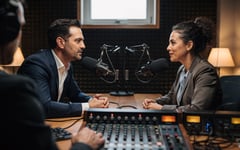
A flat logo wall, ceiling light that washed out both presenters' faces, and a camera frame that made the room look smaller than a storage cupboard.
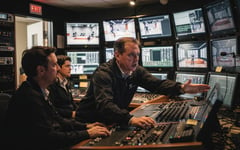
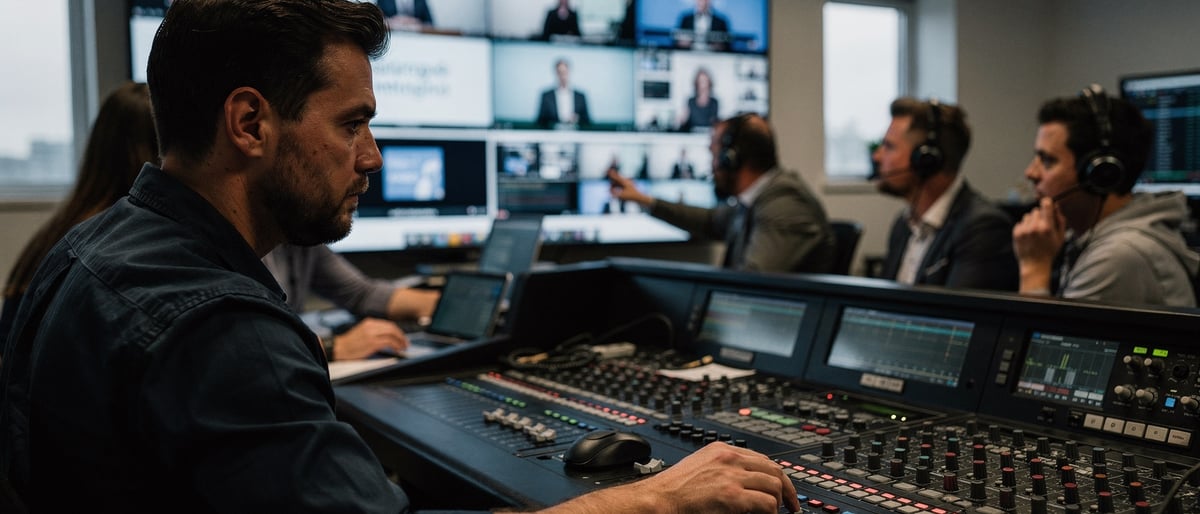
Green screen run from the London virtual studio, a composited backdrop built from campaign artwork, and lighting set so presenter and background matched.
The same client came back with their next event. This time we ran it from our virtual studio in London. Green screen, a composited backdrop built from their campaign artwork, and lighting set specifically so the presenter and the background matched rather than clashing.
Same speakers. Same format. Same length.
Average watch time was twenty-two minutes longer than the January event. Drop-off at the halfway point fell from 65 per cent to 19 per cent. Feedback used words like “professional” and “easy to follow”. Those aren't content words. They're staging words.
The concern about green screen
The hesitation I hear most often: won't it look fake?
That depends entirely on the lighting. If the presenter and the composited background are lit to match, the technique is invisible. Viewers don't see the green screen. They see a well-prepared environment and they give it their attention.
What makes virtual studios london useful for this kind of event isn't the compositing software. Compositing software is widely available. The difference is control: proper control of the light on the presenter, a crew who have matched foreground to background dozens of times, and a process where nothing needs to be improvised on the day.
In a well-run studio the green screen disappears. The environment becomes the point, which is exactly where attention should be, not on the technique that produced it.
What I got wrong for a long time
I'll say something I should have admitted sooner. For years I thought what online audiences needed was better content. More insight, sharper delivery, a tighter run of show. Those things matter.
But they don't work if the staging has already given viewers a reason to leave.
The first job of a staged event isn't to deliver information. It's to earn the right to be watched. The client in January had done the intellectual work properly. What they hadn't done was think about whether the image they put on screen in the first thirty seconds was worth staying for.
That's easy to miss, because content is visible and staging is invisible when it works. Bad staging is also invisible in a way: people can't always name what's wrong, but they feel it immediately and they act on that feeling by leaving. By the time they've closed the browser, the content hasn't had a chance.
I spent a lot of time in the early years of running Disruptive thinking about how to help clients make better content. I still think about that. But the staging question came later, and when I started seeing the data, it changed how I talk to clients about what they actually need before they launch into building an agenda.
What the drop-off numbers mean in practice
When an event loses its audience early, the post-mortem usually looks at the speakers, the topic, the time slot, the invitation email. Those are all worth reviewing.
But if the environment told viewers from the first frame that this wasn't prepared with care, the content never gets a proper hearing. The mechanism is straightforward. Viewers stay when the image makes them believe something worth seeing is coming. They leave when it creates doubt. Staging is one of the loudest signals in that first-impression calculation, and it's one of the most controllable.
That's what a well-equipped studio removes: the doubt that starts the drift before the speaker opens their mouth. You can't recover audience trust mid-event. You have to earn it in the opening frame.
What to check before your next event
Before every client event we run, I ask the same question: what does this look like to someone who's never heard of your company, in the first thirty seconds?
Not the content, not the speakers, not the credentials. The image.
Does it look like something was prepared? Does it signal that the people behind this event considered how it would land with a stranger? Or does it look like an internal call that got accidentally made public?
That's an uncomfortable question if the answer isn't good. But it's the right one to ask before you spend six months building an agenda for an event that loses its audience before it starts.
The practical question
Not every event needs a studio. An internal briefing for a small team, a quick client check-in, a team update for thirty people: those are fine with a clean desk and decent light.
But if you're running something where early drop-off costs you, where the impression your organisation makes to a large audience matters, or where you need people to stay until the final message lands, the staging deserves the same attention as the agenda.
Our London studio books two to three weeks ahead. If you've got an event in the diary and you want to see what the right environment looks like before you commit, come and see what we'd build for you. [See studio availability.]
Frequently asked questions
Why do viewers leave a webinar in the first thirty seconds?
The decision to stay or leave is mostly visual. If the opening image looks unprepared, viewers feel something is off and look for another tab before the content has had a chance.
Won't a green screen look fake?
That depends entirely on the lighting. When the presenter and the composited background are lit to match, the technique is invisible and viewers simply see a well-prepared environment.
What does a virtual studio actually change?
It changes control of the light on the presenter and matches foreground to background, so nothing has to be improvised on the day. In one client event watch time rose by twenty-two minutes and halfway drop-off fell from 65 per cent to 19 per cent.
Does every event need a studio?
No. An internal briefing, a quick client check-in, or a team update for thirty people is fine with a clean desk and decent light. The studio matters when early drop-off costs you or a large audience is forming an impression of your organisation.
How far ahead should I book the London studio?
The London studio books two to three weeks ahead, so put your event in the diary early if you want to see the right environment built before you commit.