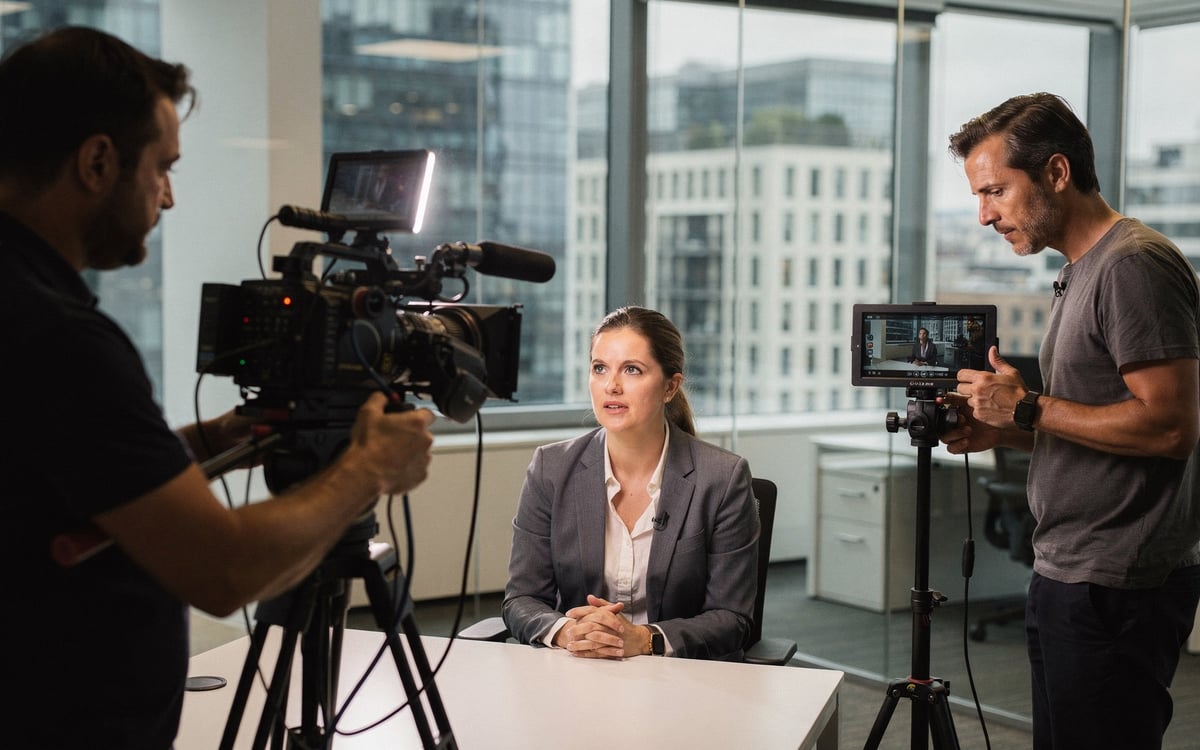
What we tell clients who are scared of being on camera
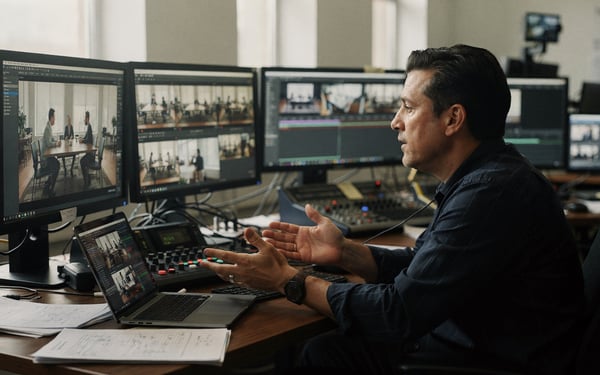
Most people who say they are bad on camera have never been properly directed. The fear is real, but the cause is almost always a production problem, not a personal one.
Insights, stories, and expertise from the studio floor.
Most people who say they are bad on camera have never been properly directed. The fear is real, but the cause is almost always a production problem, not a personal one.

Most studios lose the enquiry before anyone picks up the phone. The buyer has already decided, and they decided on evidence you either control or ignore.
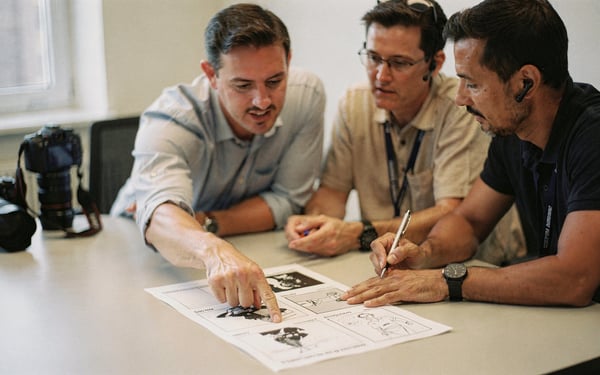
A vague brief produces a polished film nobody wanted. Kate Bennett on the exact questions that have to be answered before a camera moves.
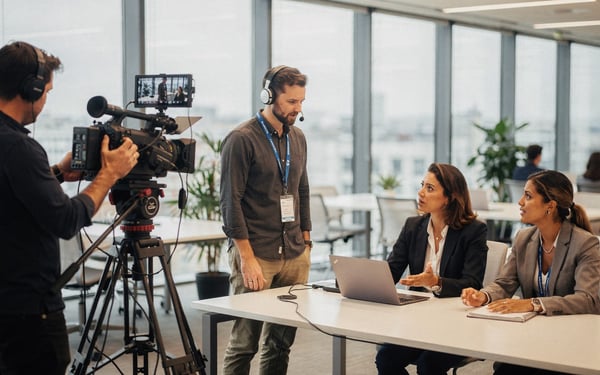
Every business that hesitates on a brand film is using the wrong unit of analysis. Change the denominator and the conversation with finance changes too.
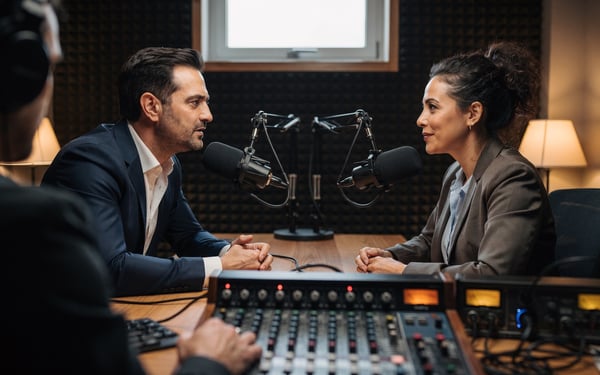
We ran a trial of binaural audio processing on a leadership interview and the client could not articulate what was different. They just felt it. That is the point.

A four-part video series, left alone for fourteen months, quietly produced twelve warm leads. Here is the mechanism behind it and the maths that makes the case.
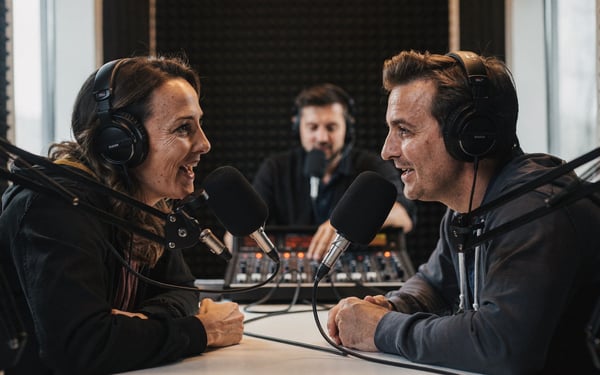
The audio-only version was more convenient to consume. It was also watched by fewer people, shared less, and remembered by nobody who mattered.
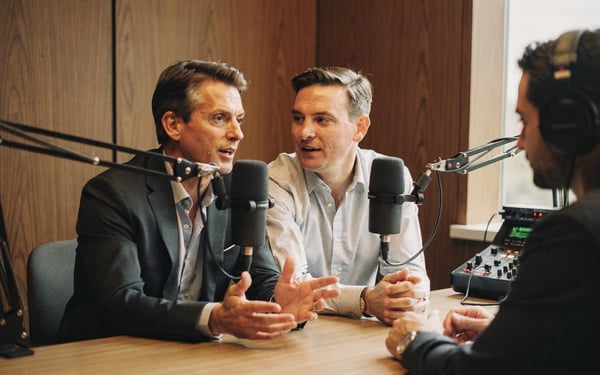
We spent years filming executive interviews the wrong way. The fix was obvious once we stopped fighting what the camera was actually doing to people.
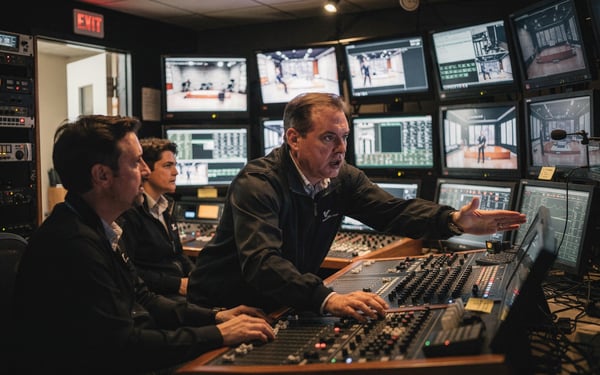
Every client thinks they can wing it. Every client who has stood on a virtual studio floor knows differently.
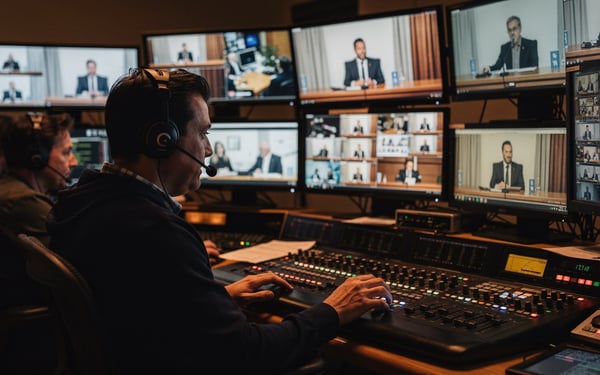
The middle twenty minutes of a panel are where you lose the audience. Here is what we change in the studio to stop that from happening.
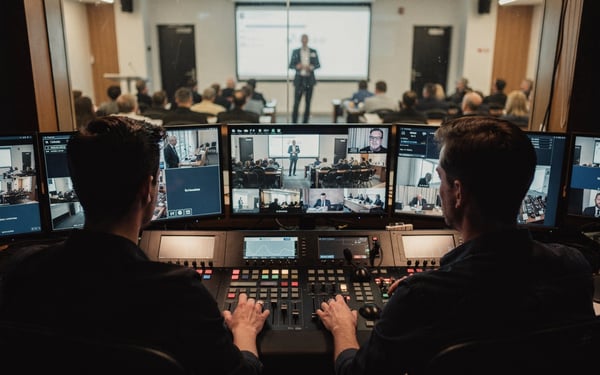
At most hybrid events, the online audience gets a lesser version of what the room sees. This is the production story of the one where we fixed that.
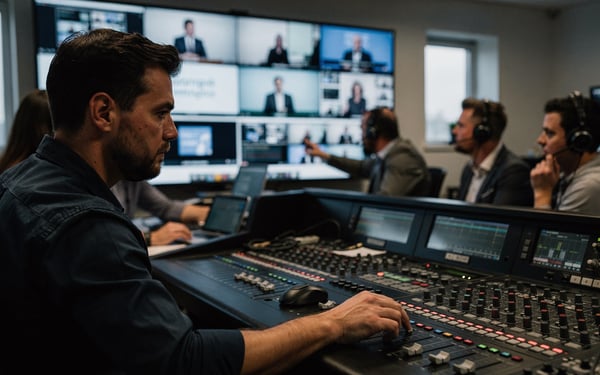
A client's product launch lost two-thirds of its audience before the Q&A opened. The content was strong. The staging told viewers to leave.
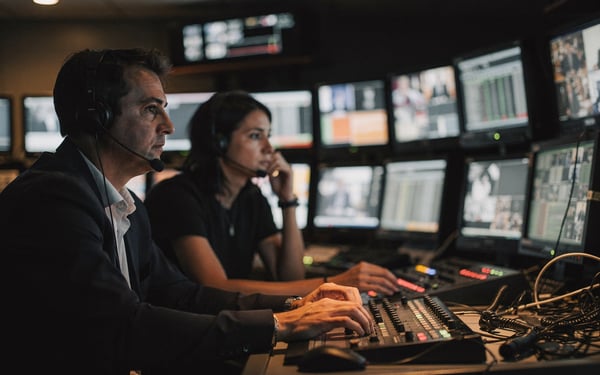
Inside the monitor stack of a live show director. The signals, the tells, and the split-second calls that keep a broadcast looking composed.
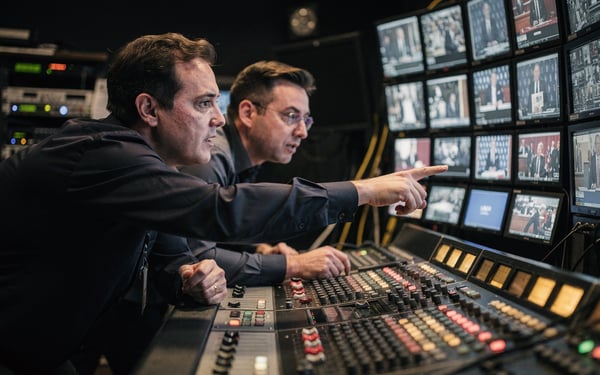
A live broadcast failure nobody saw coming. What the backup plan looked like, how the audience never knew, and why redundancy is not pessimism.
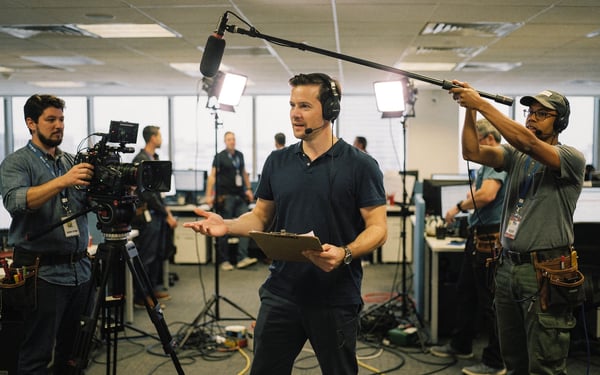
When a shoot falls apart, the crew looks to one person. Here is what that person actually does, and why the role is worth every penny.
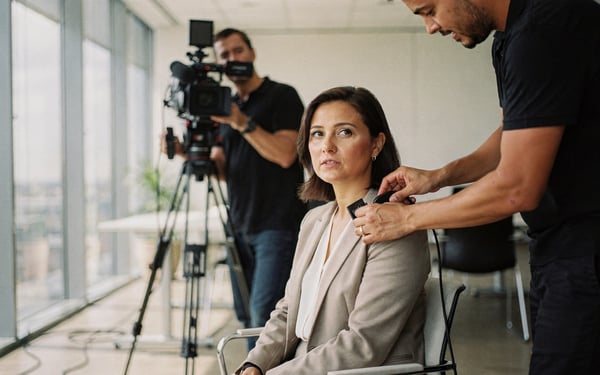
One executive, one morning, no second chance. Andrew McLean walks through the pre-production sequence that turns a high-stakes testimonial day into a clean delivery.

A 23-line quote for a single interview day on the Southbank is not thoroughness. Tom Burke explains where Southbank shoot budgets actually go wrong and what genuinely cannot be cut.
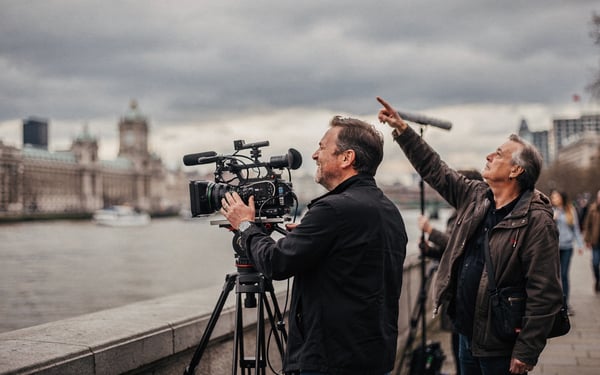
A Southbank exterior sounds simple until the tide table says otherwise. Andrew McLean explains the three variables that determine whether you shoot or reschedule.
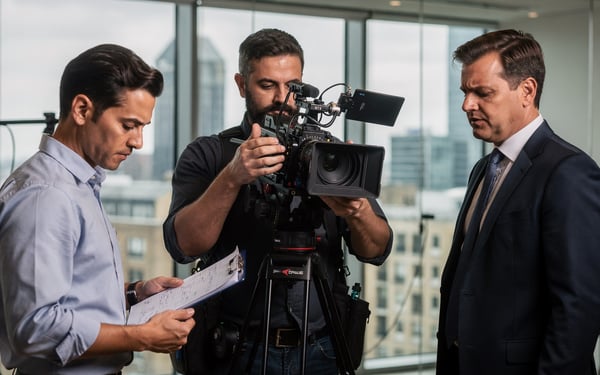
A client needed a filming space at five days' notice. What happened next was predictable, expensive, and entirely avoidable.
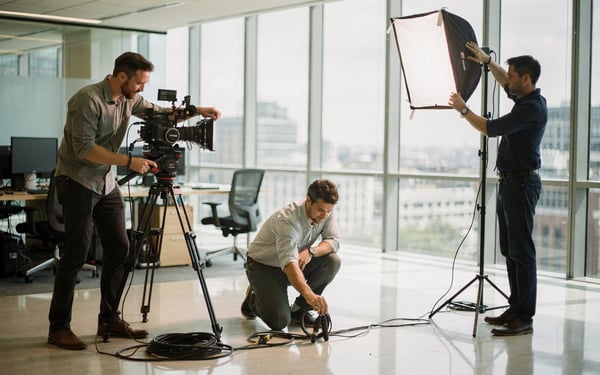
The hour before a client arrives on set is the one nobody sees. Here is what a professional London crew is doing while you're in the cab.
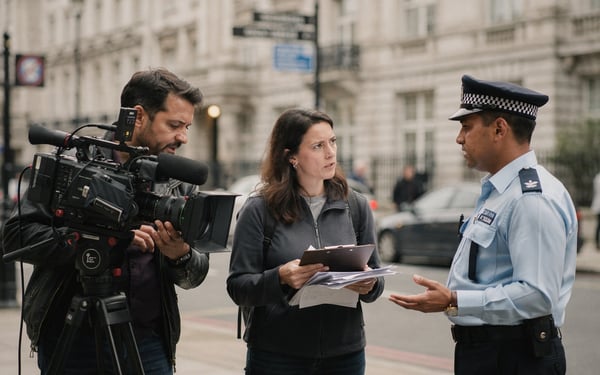
One missing document nearly shut down our Southbank shoot. Here is what we learned about permits, compliance, and never leaving this to chance again.
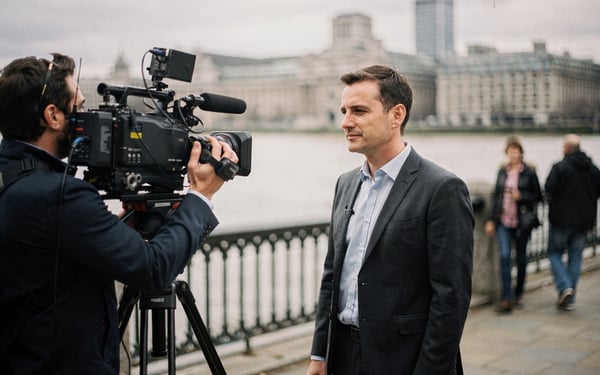
Andrew McLean on the real risks of filming on the Thames and why, when the brief is right, the Southbank keeps delivering what a studio cannot.
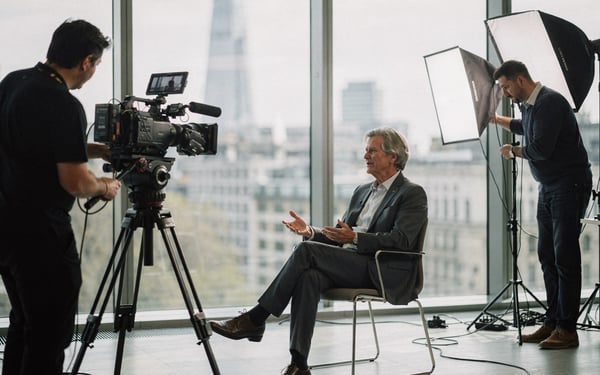
Kate Bennett on the capability gap that isn't about cameras, and what changes when a professional team takes over the interview and the edit.
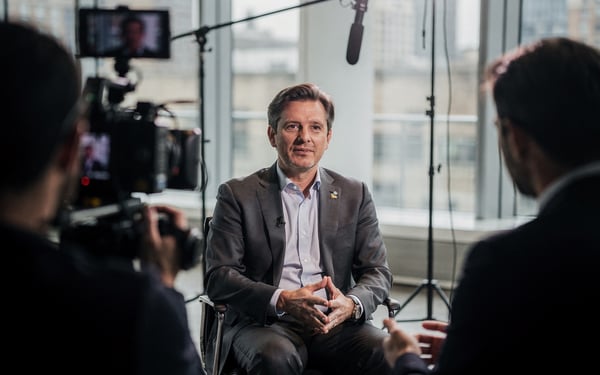
Most talking heads fail before the camera rolls. Andrew McLean on what the floor crew does differently to turn a reluctant exec into a compelling subject.
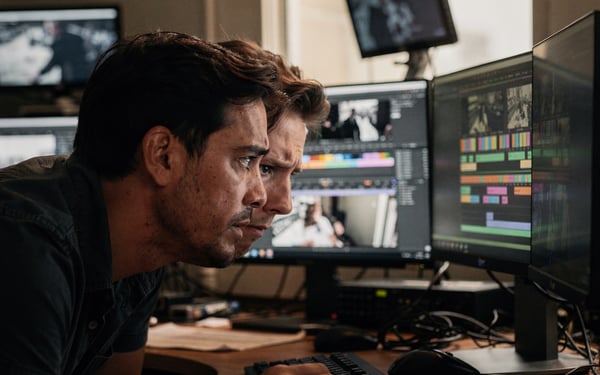
The client saved four thousand pounds on the production day. They spent fourteen thousand pounds fixing what that saved them.

A client called twelve months after we wrapped to ask whether we could reshoot. The film we had both been proud of looked wrong.
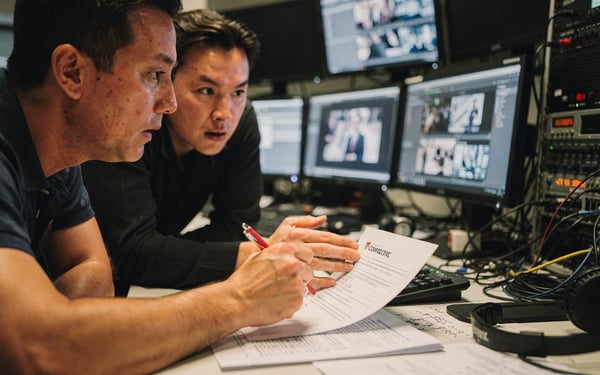
For years I thought a longer script meant a more complete brief. It meant a more boring film.

The deal had been in proposal for six months. Budget approved, champion in the room, legal cleared. A two-minute film from a reference client unstuck it in a week.
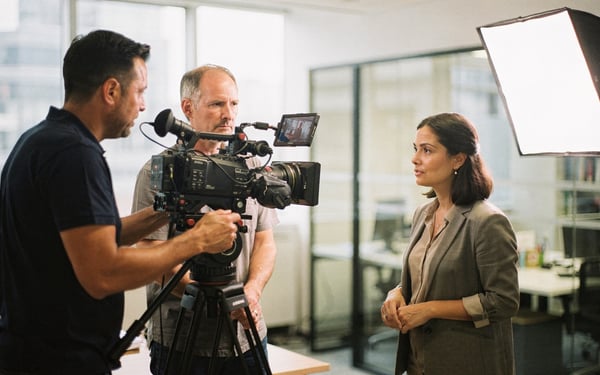
A marketing director showed me a £250,000 brand film with four thousand views. The production was excellent. The brief was not.

I nearly axed our internal video budget. A team member stopped me with a spreadsheet. Looking at those numbers changed how I think about corporate video entirely.

The creative team loved it. The CFO killed the budget in three minutes. He was not being difficult. He was asking the only question that mattered, and nobody in the room had an answer.
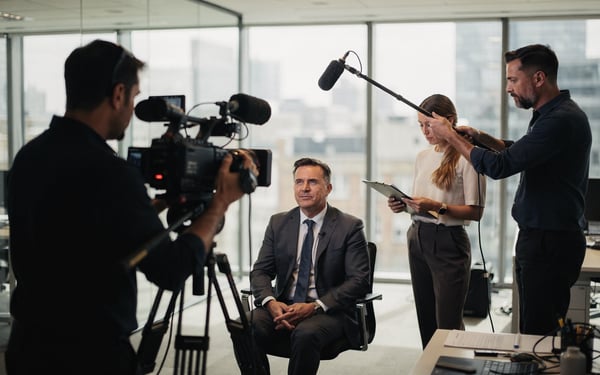
We spent three days on a film I was genuinely proud of. It got forty-two views in six months. The problem was not the production. It never is.
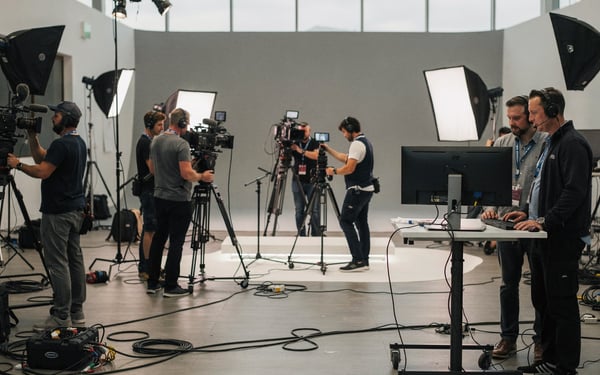
The studio call came at 3pm on a Wednesday. The launch was Friday. Here is what we actually did, and what a compressed timeline teaches you about which risks are real.
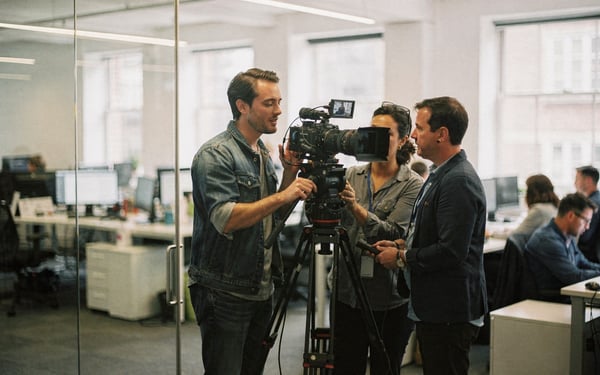
I tracked three shoot days across two London boroughs and added up the travel time. Four and a half hours of crew time. That is where most production budgets quietly disappear.
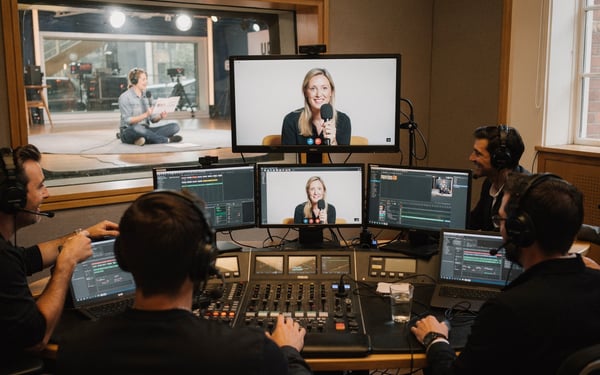
She was joining from Tokyo at 10:17 PM her time. Our panel went live in London at 2:00 in the afternoon. What made it seamless had nothing to do with luck.
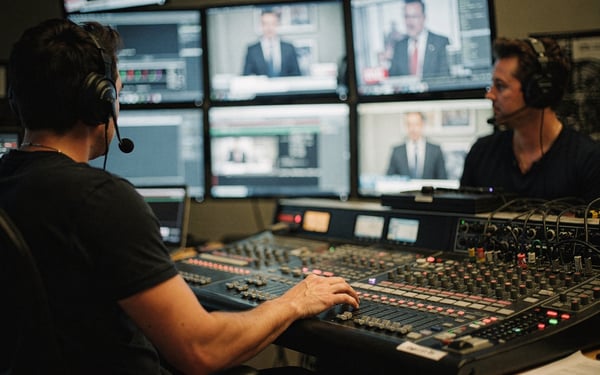
I sent a client into a Series B round with boardroom footage that read immediately as a company that had not thought about how it looked. The feedback arrived six weeks later.

Most brands reject virtual production on the strength of a technology they stopped using years ago. The assumption is costing them ground they will not easily recover.
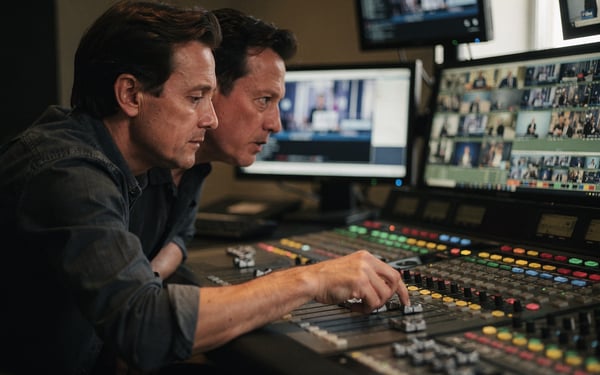
I put a location shoot in front of a client as the aspirational option. A week of watching the invoices arrive taught me what I had actually done to their budget.

A flooded venue, eight hours to shoot day, and a crew that had not been briefed. Here is exactly what happened next.
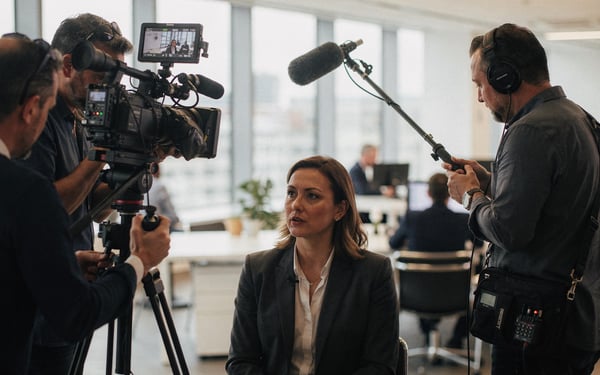
I sat in on a pitch we lost. The winning firm was not better. They were on screen more often, in three specific ways, and the buyer never met us in person to compare.
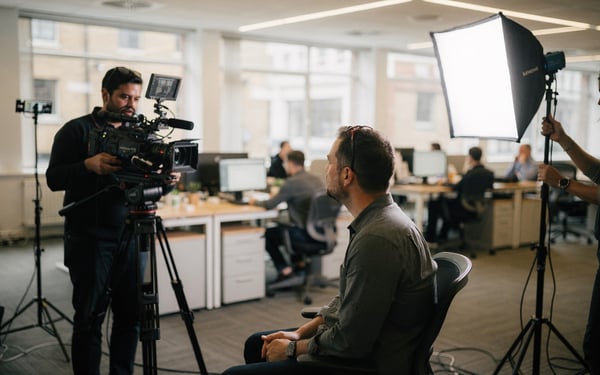
We set out to film one department's story. It ended up running in onboarding, in sales rooms and at the all-hands, because we filmed the truth instead of the brochure.
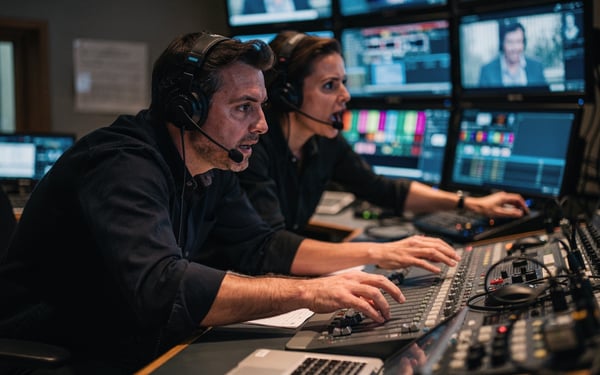
A director's account of the small failures that sink live streams, and the unglamorous habits that keep a virtual studio show on air.
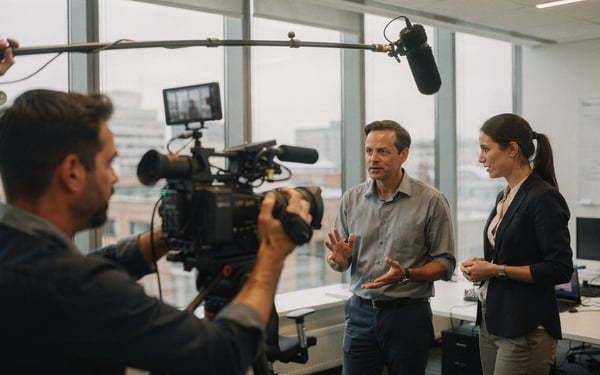
I once approved a quote with a line item I didn't understand because asking felt unprofessional. It cost us. Here's how to hire a film crew in London without pretending you know the words.

We booked a crew with four days' notice and got one. Everything that went wrong on that shoot traced back to those four days. This is what last-minute actually costs in London, and how to never need it.
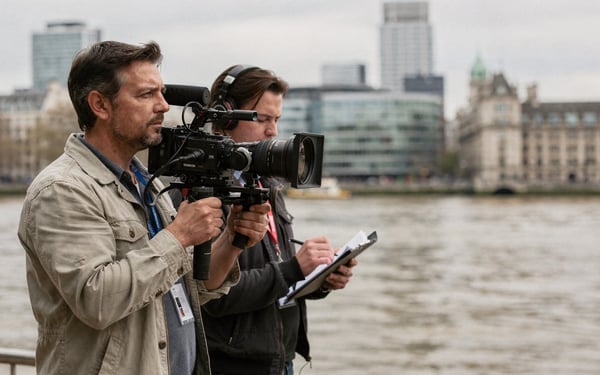
We lost a morning of filming on the Southbank because I treated the location as a backdrop instead of a decision. This is what the river actually costs you, and what it gives back when you plan for it.
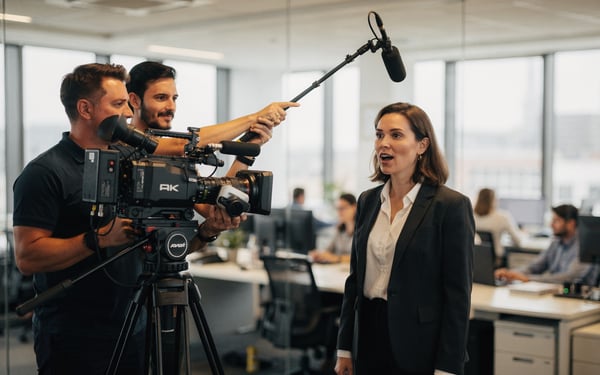
A new starter told me our onboarding video made her wonder if she'd joined the wrong company. She was one of the good ones. This is what bad training video actually costs, and what we did about it.
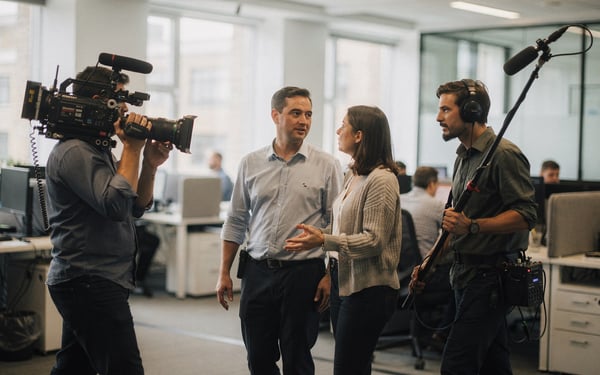
We shot four executives against a grey wall, one after another. The film tested worse than the slide deck it replaced. The fix was not better executives. It was a different question.
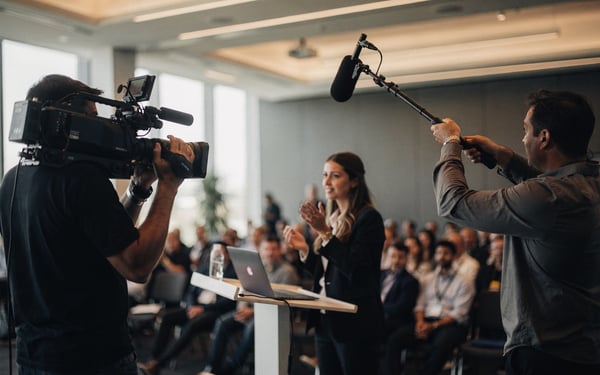
The slides were fine. The content was fine. So why did the recording look like a webcam call from 2020? The problem was three things nobody put on the run sheet.
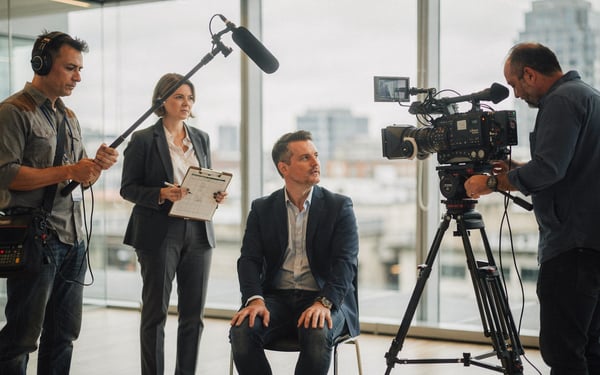
A quote landed on my desk for nine grand. Another for twenty-six. Same brief. Here is where the money actually goes, and the line item nobody warns you about.

A client showed me a £30,000 brand film his sales team had never once sent to a prospect. It was beautiful. It was useless. That video taught me the five mistakes that quietly waste most corporate video budgets in London, and how to spot them before you sign anything.
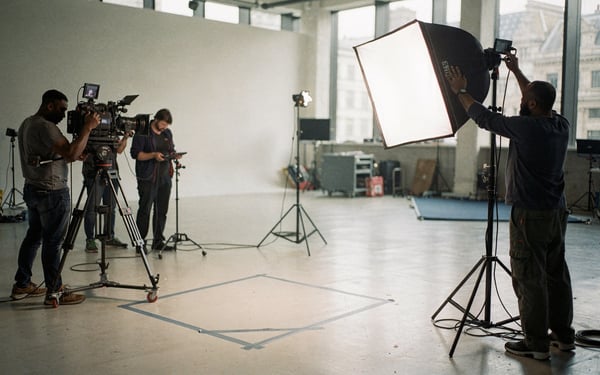
I watched a client's CEO walk onto our set, look at the wall behind him, and ask where the green screen was. There wasn't one. Here is what actually goes into a broadcast-ready virtual set, and why the invisible parts are the ones that decide whether your video looks like television or like a webinar.
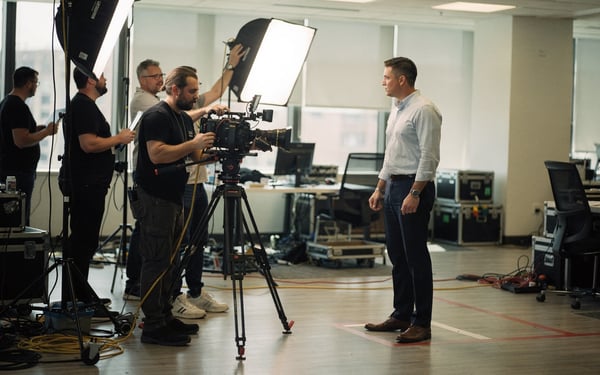
A head of marketing told me she was out of video budget by March. We did not give her more budget. We gave her two days in a London virtual studio and a plan, and her content lasted until the following January. Here is exactly how the maths works.
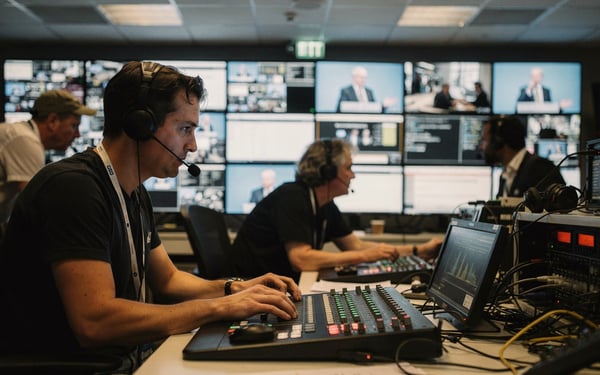
A FTSE comms lead told me she'd stopped booking ballrooms. Her keynotes now run from a virtual studio in central London, and her board never noticed the room had gone. Here is what changed her mind, and what it should change about yours.
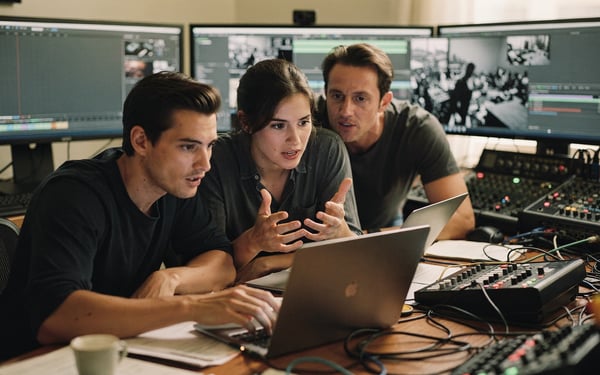
We make AI people at Disruptive Live. So this is not an argument against AI video. It is an argument about what happens to content at 18 months old — and why the calculation most marketing teams are running is the wrong one.
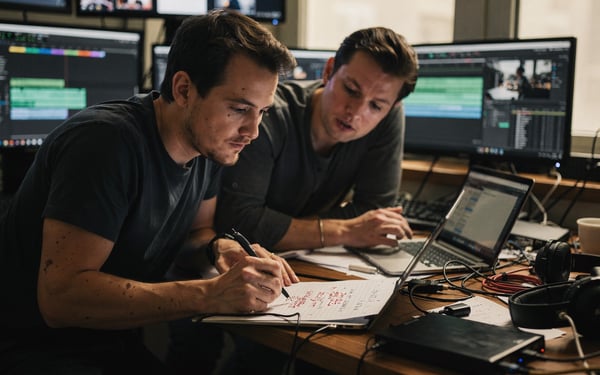
AI is brilliant for getting a first draft down fast. The problem is that ChatGPT and Copilot have default habits that sound fine on paper and fall completely flat on camera. A few small tweaks make all the difference.

Prospect Theory says people fear losing more than they want to gain. The deals that close are the ones where the cost of inaction was made concrete, not where the gain was sold hardest.

Executives scan email rather than read it. Lead with the conclusion. Put everything else below it.

Generic ROI calculators and pitch-deck business cases are being quietly filed away before they reach the decision-maker. The deals that close are built around the prospect's specific outcomes.

Buyers are using LinkedIn hashtags like #IAmBuying to pull vendors toward them. The traditional interruption model of cold outreach is collapsing.
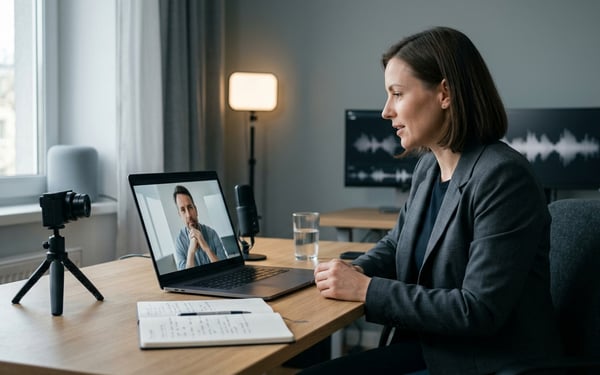
Most first calls are product demos in disguise. A pre-meeting video that answers the questions every prospect asks changes that dynamic completely.

Buyers complete 57 to 70 percent of their purchase decision before they speak to sales. That changes everything about what the first call is actually for.

Buyers who feel hunted stop talking. The counterintuitive discovery from negotiation research: giving someone permission to say no opens the conversation that pushing for yes always closes.

Talking to a finance director about brand vision is like suggesting a surgeon rely on healing crystals. CFOs care about LTV to CAC, risk mitigation, and business outcomes.
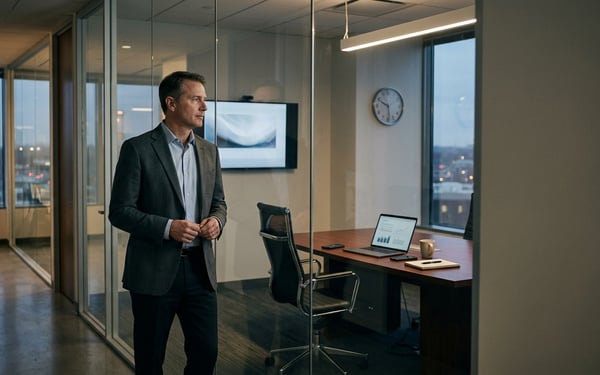
No decision beats every named competitor in B2B sales. When a deal goes dark, it rarely means they chose someone else. It means nobody made the case for change compelling enough.

Winning the champion feels like progress. It usually isn't. The real buying decision happens in rooms you'll never enter, and most deals die there.

We spend thousands on video and wonder why nobody watches it. The problem isn't the camera. It's what we're pointing it at.
A brilliant testimonial shown without context reads as noise. A 1920s Soviet filmmaker explains exactly why.
The Peak-End Rule means your audience will remember exactly two things: the most intense moment and how you finished. Most speakers save the ending for last.

People share content to look good to their networks. Most corporate social accounts have this backwards.

Aristotle diagnosed this 2,400 years ago. Most business communicators default to Logos and skip Ethos and Pathos. Data convinces no one who doesn't already trust you.

The more confidently you claim to be the best, the less your audience believes you. The fix is structural, not stylistic.

Release all bad news at once. Stage good news in intervals. Most organisations do both the wrong way round and turn a bad story into a long one.
Naming your product's obvious limitation before anyone asks does not lose deals. It closes them.
The person who speaks first after naming a price usually loses. The silence after you state your number belongs to the room.
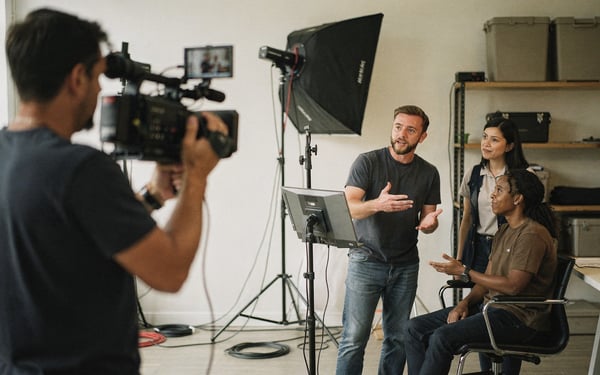
The budget you spend outsourcing your content is the authority you hand to someone who will be gone in twelve months.
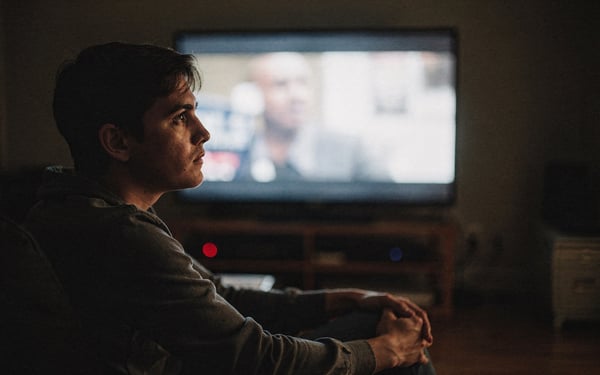
The conventional wisdom that all video must be short is wrong. A buyer preparing to spend significant money will watch 20 minutes. Most corporate content gives them nothing worth watching.
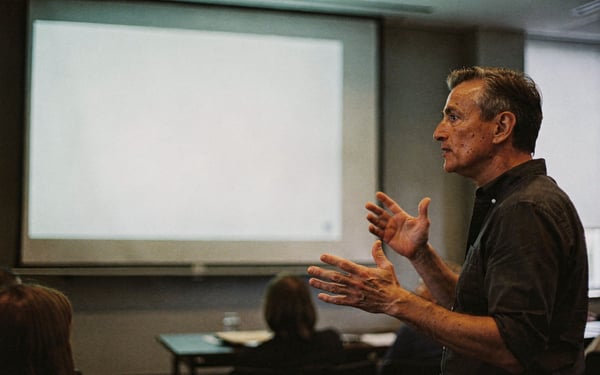
Every element on a slide competes for the same attention. Hitchcock worked out the hierarchy problem in 1930. Most decks ignore it entirely.
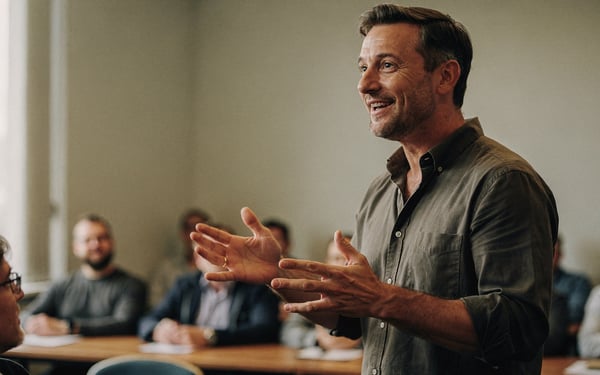
A script gives you control over every word and no control over whether anyone believes you.
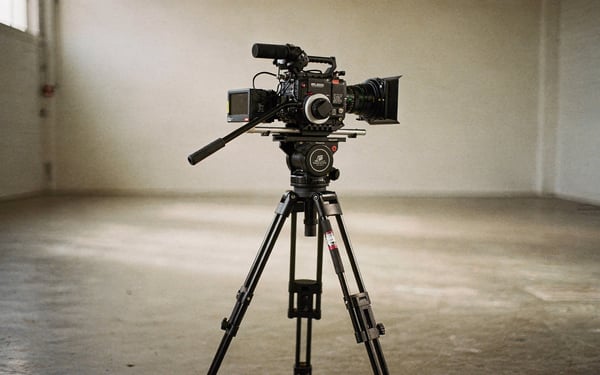
An About Us video is a vanity project dressed as a sales tool. Sales teams do not use them because they do not answer buyer questions.

Vague positioning does not attract a wider audience. It attracts no specific one.

Gender-coded language operates below the level of intent. You can write with complete goodwill and still consistently address one half of the room.

Every sales call that opens with the same eight questions is a call you did not prepare for.

Audiences decide whether they're rooting for you before you've said anything substantive. One small honest moment does what credentials cannot.

A brand that means seven different things to seven internal people means nothing specific to anyone outside.

Authenticity consistently outperforms production value in sales. An unscripted webcam message works precisely because it does not look expensive.

Hiding your pricing does not protect you from commodity competition. It creates it.

Every piece of communication has one angle. The paragraph that fails the test is usually the one you are most reluctant to cut.

At 11pm a prospective buyer searches for how much your service costs. Your website either answers that question or loses them to someone who does.

Proposals built around context-then-conclusion serve the writer's need to justify before stating. Readers need the answer first.

Naming who your service is not for dramatically increases trust with the people it is for. Saying this might not be right for you is either the most honest thing in a sales meeting, or the start of your best client relationship this year.

Preamble is the tax you ask an audience to pay before giving them what they came for. Your opening sentence should be the sharpest thing in the talk.

We use premium and luxury interchangeably, but they are completely different things. Here is what actually makes a brand feel considered — across your videos, socials, and everything in between.

We use "premium" and "luxury" interchangeably, but they're completely different things. Here's what actually makes a brand feel considered — across your videos, socials, and everything in between.

Most podcast interviews are forgettable because the host is performing, not connecting. Here's what actually works.
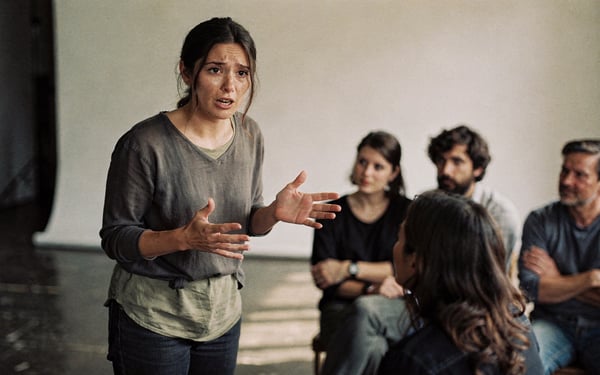
A funny yet painfully honest take on learning to survive public speaking

Interactive video makes buyer journeys
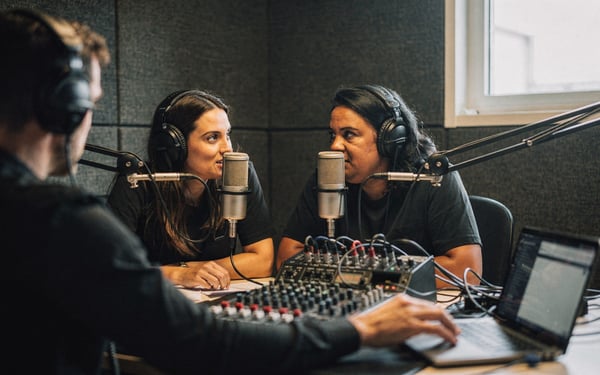
Summary This blog post explores how spatial audio is transforming the experience of listening to podcasts and watching videos. By placing sounds in a three-dimensional space, spatial audio creates a m

The Golden Thread
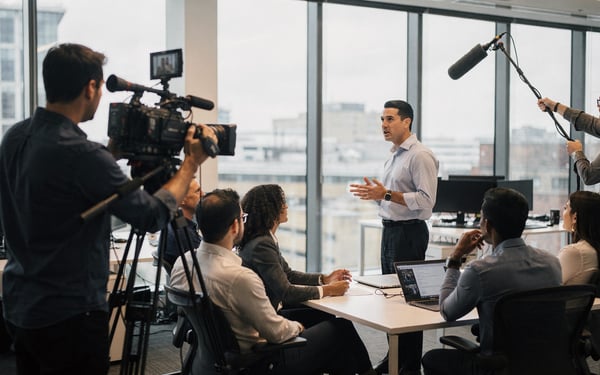
Engage employees with effective training videos.

Boost script delivery with key insights & practice.

Strong scripts drive successful video communication.
Evolved corporate training with engaging, concise, tailored video content.

Strategic video = ROI. Plan, track, use online platforms wisely.

Effective internal communication thrives with authentic, clear, and accessible video.

Capture attention, build trust, and boosts engagement in today’s world.