
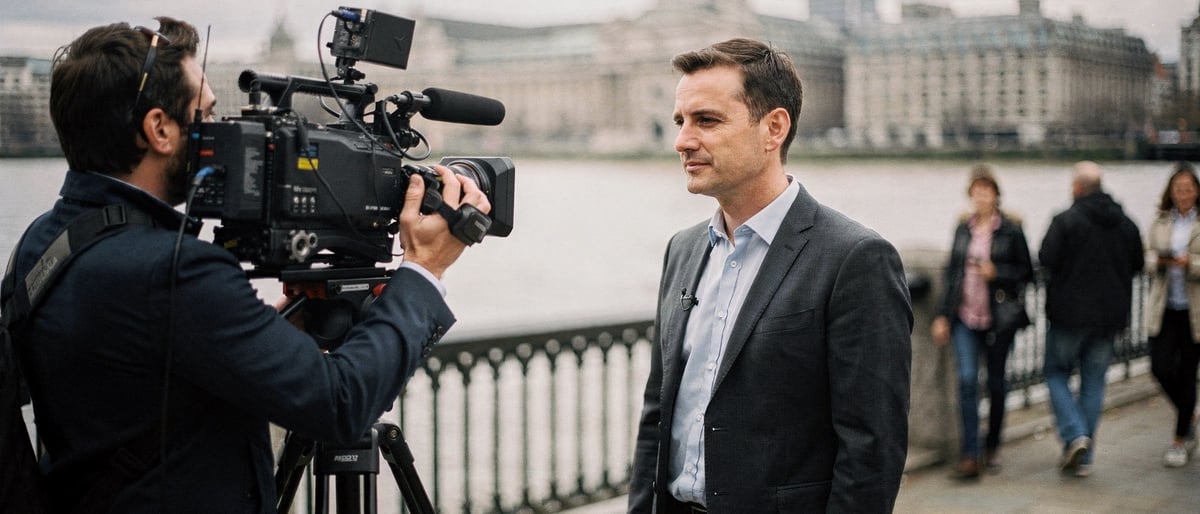
The forecast said overcast. That's the best possible forecast for exterior filming on the Thames: soft, even light, no harsh shadows, no chasing cloud breaks between takes. We had a seven-hour window and a three-person crew.
By nine-thirty, we'd lost forty minutes to a re-routed cycling event that blocked our equipment access route, the overcast had broken into hard white sun, and the client's spokesperson had a cold she hadn't mentioned.
We filmed anyway. We adjusted. By two in the afternoon we had everything we needed.
That morning is why I'm careful when clients ask whether the Southbank is worth the risk.
What the risk actually is
Every exterior location carries risk. The Southbank carries a specific set: pedestrian traffic, permit restrictions that specify where you can and cannot position a camera, tidal light that shifts faster than most inland shoots, and an environment where something interesting is always happening twenty metres from your frame.
Most of that risk is manageable. Some of it is genuinely useful. The key is knowing which is which before you arrive.
Permits for filming studios london southbank and the adjacent riverbank require either a Lambeth or a Southwark application depending on where you're standing. Lead time is typically two to three weeks for a professional production permit. There is no last-minute approval for a riverside camera position on a weekday. Plan for this or plan to be somewhere you didn't intend.
What the location gives you
There's a reason the Southbank appears on London shoot schedules year after year. It's not only the view, though the view is good. It's what the view communicates.
A spokesperson filmed at a desk in a glass office looks like every other spokesperson filmed at a desk in a glass office.
The same person, same words, filmed walking a riverside terrace with the city behind them, looks like someone who belongs in the conversation about what London is doing at scale.
A spokesperson filmed at a desk in a glass office looks like every other spokesperson filmed at a desk in a glass office. The same person, same words, filmed walking a riverside terrace with the city behind them, looks like someone who belongs in the conversation about whatever London is doing at scale. The location earns authority before they open their mouth.
That transaction is real and worth the production overhead, when the brief is right for it.
The brief that suits the Southbank
A detailed technical explanation needs a controlled environment: clean audio, no traffic rumble, no pedestrians crossing the frame. When the content requires concentration, put the subject in a studio.
When the message is directional and high-level, a chief executive setting out a vision, the environment does work no controlled set can replicate. It adds scale without saying a word.
Not every brief belongs on location. A detailed technical explanation needs a controlled environment: clean audio, no traffic rumble, no pedestrians crossing the frame. When the content requires concentration, put the subject in a studio.
The Southbank works best when the message is directional and high-level: a chief executive setting out a vision, a senior leader framing a market moment, a spokesperson making a case the audience should feel as well as hear. In those situations, the environment does work that no controlled set can replicate. It adds scale without saying a word.
We've used filming studios london southbank for testimonials, executive addresses, campaign openers, and once for a project that needed to signal that a brand was genuinely embedded in London's creative sector. In each case, the location was earning its keep in the frame.
What you have to manage
Audio is the variable most productions underestimate. The Southbank is not quiet. Wind, river traffic, skateboarders, amplified buskers, tourist groups. A lavalier mic helps; a skilled recordist who monitors in real time and moves takes when the background spikes actually solves it. Never bring a Southbank crew without someone whose entire job is listening.
Timing matters more than most briefs allow for. The pedestrian density at lunchtime on a weekday is different from the density at nine in the morning. Hard midday shadow arrives fast and stays long. We schedule shoots around these patterns, not around the client's calendar, and then find the slot that fits. Most clients adapt readily when they understand why.
Having a contingency plan built into the day means that a half-hour delay becomes a production adjustment rather than a reshoot.
The golden-hour light on the Southbank is worth chasing when the brief calls for it. Late afternoon in autumn gives a quality that no rigged studio can credibly replicate. The constraint is that it lasts around forty minutes and you have to be ready before it arrives. Build that into the call sheet and it stops being a risk and starts being an asset.
The morning that worked
Back to that overcast-turned-bright morning. The forty minutes we lost to the cycling event went into subject prep, which she needed. The cold meant shorter speaking windows, so we built the edit around fewer and tighter takes. The hard light we handled by moving the frame to a covered section of the terrace where she was in open shade.
None of those adjustments were complicated. They were fast because we'd planned for contingency before we arrived. That's what de-risking a Southbank shoot actually means: not removing the variables but having the response ready before they appear.
The location was worth it. It nearly always is, when the brief calls for it and the crew is prepared.
If you're planning to film on the Southbank and want to talk through permits, logistics, and whether the location suits your brief, come to us before the application stage. We'll tell you honestly whether it earns its place.
Frequently asked questions
Do I need a permit to film on the Southbank?
Yes. The Southbank and the adjacent riverbank require either a Lambeth or a Southwark application depending on where you are standing, with a typical lead time of two to three weeks for a professional production permit. There is no last-minute approval for a riverside camera position on a weekday.
What kind of brief suits a Southbank shoot?
It works best when the message is directional and high-level, such as a chief executive setting out a vision or a senior leader framing a market moment. For detailed technical content that needs clean audio and concentration, a studio is the better choice.
How do you handle the noise on the Southbank?
Audio is the variable most productions underestimate. A lavalier mic helps, but the real solution is a skilled recordist who monitors in real time and moves takes when the background spikes. Never bring a Southbank crew without someone whose entire job is listening.
What time of day is best for filming there?
Timing matters more than most briefs allow for. Pedestrian density at lunchtime is far higher than at nine in the morning, and hard midday shadow arrives fast. Golden-hour light in late afternoon is worth chasing, but it lasts around forty minutes so you have to be ready before it arrives.
What happens if the weather or conditions change on the day?
A contingency plan built into the day turns a half-hour delay into a production adjustment rather than a reshoot. De-risking a Southbank shoot means not removing the variables but having the response ready before they appear.