
The photograph arrived on a Thursday. The client had attached a headshot of the man we'd be filming Friday morning: arms folded, jaw set, the expression of someone who had agreed to appear in a corporate video and was already regretting it.
We've filmed enough of these to know that photograph wasn't a problem. It was information.
By eleven the next morning, he was mid-sentence on his third pass of the opening segment, completely unaware the camera was rolling. The clip we pulled from that take opened the film. His team said they'd never seen him look like that on video before.
Here's what changed.
The prep document
A week before every talking-head shoot, we send a short document. Not a script. Not a list of approved messages. A set of open questions designed to help the subject find two or three things they genuinely believe about the topic, rather than the things their communications team has cleared for external use.
For this shoot, one of those questions was: what's the thing about this subject that most people in your sector still get wrong? He sent back three paragraphs at eleven that night. That email became the spine of the interview.
Preparing the subject before they step on set is the most undervalued part of any corporate video production. You cannot fix a blank stare in the grade. You can prevent it on the Wednesday.
The first twenty minutes on set
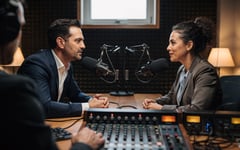
He arrived early, which they often do when they're anxious. We walked him around the studio before anything was set to record. Explained the green-screen virtual set, where his eyeline would sit, what he'd see on the monitor. Answered his questions, which were mostly about how he'd look.
We did a tech run that lasted eleven minutes. Not to check levels, those were already set, but to put his voice in the room and let him hear it. By the time we called the first proper take, he had been talking for twenty-five minutes. The camera was ordinary. He'd stopped bracing for it.
A full room of crew and onlookers makes the shoot feel like a performance, and the subject performs confidence rather than holding a conversation.
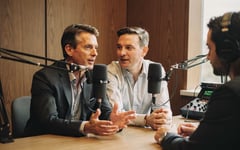
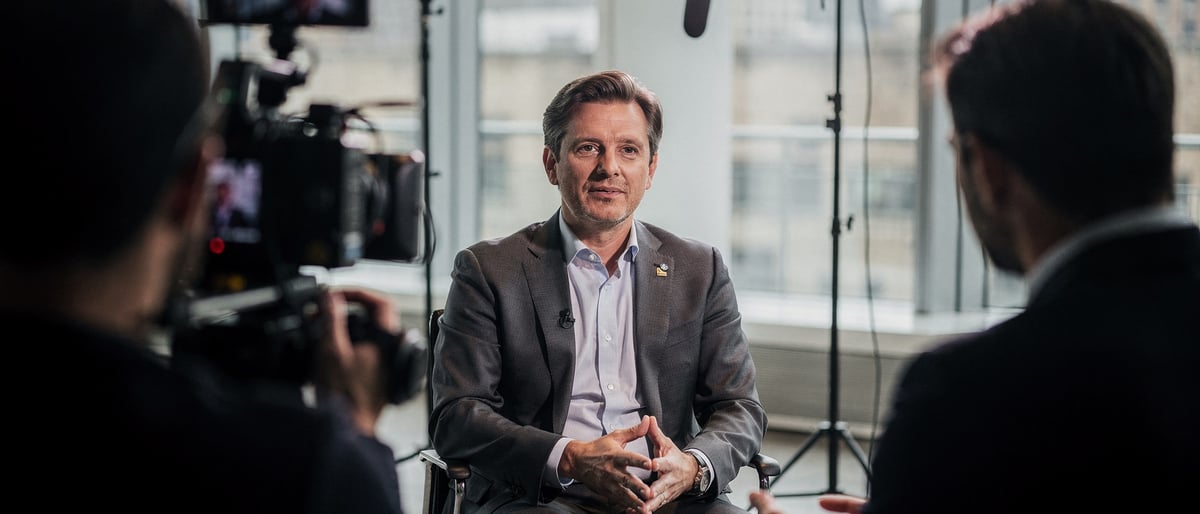
A small crew of director, camera op and sound keeps the room calm, so the subject talks as they would in a meeting and reads as natural.
The crew stayed small: director, camera op, sound. No extra bodies to make the room feel like an audience. When it feels like a performance, you get a performance. When it feels like a conversation, you get something that reads as one.
Why most talking heads look the way they do
The corporate video london market is full of talking heads where the subject looks like they've been asked to perform confidence they already possess. The stiffness is not arrogance or discomfort with the topic. It's the camera.
Most people, faced with a lens, shift into a register that isn't quite theirs. They choose words they'd never use in a meeting. They slow down and round off their sentences. The result looks rehearsed even when it isn't, because the effort of watching yourself is visible in the face.
You don't coach that out. You remove the conditions that cause it.
The set does its share
A physical location gives the viewer something to look at that isn't the subject and pulls focus away from the face.
A green-screen virtual set drops in a clean backdrop chosen in post, keeping everything on a well-lit face.
The virtual studio setup matters in ways people don't initially expect. We shoot on green screen, which means the backdrop is chosen in post to serve the content rather than whatever happens to be in the room. For this piece, a clean gradient. It keeps everything on the face.
Physical environments pull focus in two directions: they give the subject something to reference, and they give the viewer something to look at that isn't the subject. When the frame contains nothing but a well-lit face against a considered backdrop, you either hold attention or you don't. That's a clean test of whether the prep worked.
He held it.
What the editor found
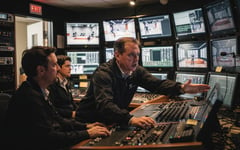
We gave the edit suite forty-four minutes of footage from a three-hour shoot. The editor cut a nine-minute film in a day and a half. That pace comes from usable material: takes where the subject found the line, or came close enough to build around.
In corporate video production in London, the ratio of shoot time to usable footage is one of the most reliable indicators of whether set preparation happened. Over-shoots that produce thin cuts nearly always trace back to a subject who never settled.
The principle it proved
A talking head that works is not a lucky day. It's an engineered outcome, built in the week before the shoot and the first half-hour on the morning of it.
The camera reveals effort. It also reveals ease. Get someone to a place of ease before you roll, and you don't need much else: a clean virtual set, a capable director, a small crew. The equipment is secondary.
If you're planning a corporate video in London and want to see the studio floor before you commit, we run walkthroughs most weeks. Come in, see the green-screen rig, understand how we run subject prep. The calm you see on the monitor is built before the record light comes on.
Frequently asked questions
What is the prep document you send before a shoot?
A short set of open questions sent a week before the shoot. It is not a script or a list of approved messages. It helps the subject find two or three things they genuinely believe about the topic.
Why do talking heads usually look stiff on camera?
It is the camera, not arrogance or discomfort with the topic. Faced with a lens, most people shift into a register that isn't quite theirs, and the effort of watching themselves shows in the face.
How long does it take a subject to settle on set?
For this shoot it took about twenty-five minutes, including a walkaround of the studio and an eleven-minute tech run, so the subject had stopped bracing for the camera before the first proper take.
Why shoot on green screen rather than a real location?
The backdrop is chosen in post to serve the content rather than whatever happens to be in the room. A clean virtual set keeps the frame on the face and removes distractions that pull viewer focus.
Can I see the studio before committing to a shoot?
Yes. We run walkthroughs most weeks. You can come in, see the green-screen rig, and understand how we run subject prep before the record light comes on.