
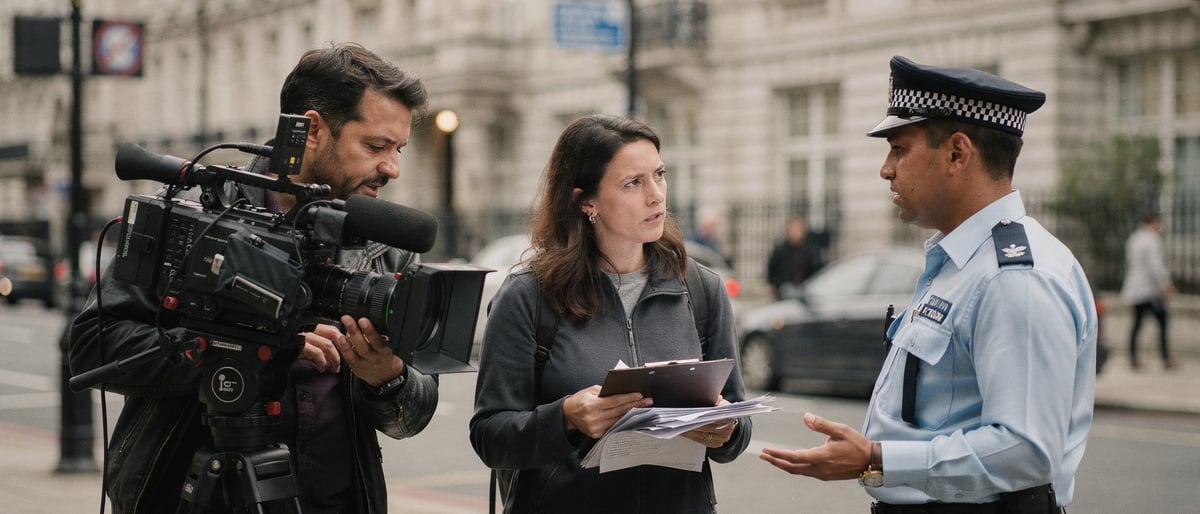
The location manager called at 7:42 in the morning. We were forty minutes from first positions, the crew was loading the van, and he said: "The permit's wrong."
Not missing. Wrong. The location we'd filed for covered the Embankment wall as far as the OXO Tower, but our setup crossed thirty feet further south into a separate Lambeth borough boundary. Two boroughs. Two permissions. We had one.
I told the crew to keep loading and got on the phone.
What followed was two hours of calls, emails, and a near-cancellation. All because a boundary line on a map nobody had checked precisely enough. We did shoot that day, barely, by the goodwill of a Lambeth council officer who happened to be on shift and willing to process an emergency consent. We lost the golden-hour window entirely. The client never said anything, but I knew what we'd left on the floor.
A morning that taught compliance
I've run dozens of shoots at filming studios around London and the Southbank, and that morning taught me more about compliance than everything that came before it.
The permit is not a formality
When people think about what can go wrong on a London shoot, they think about weather, equipment failure, talent not showing up. They rarely think about the document sitting in a folder nobody opened.
A filming permit for the Southbank area is not a single thing. The South Bank is managed across at least three bodies: the Southbank Centre, the Royal Festival Hall estate, Network Rail infrastructure where it applies, and two borough councils. If your shot crosses from one zone to another, you need authority from both. If your shoot involves a drone, that's a separate Civil Aviation Authority register. If you're on or near the bridge, Transport for London has a say. Public liability insurance must match each authority's minimum, and those minimums differ.
Most of this is knowable in advance. None of it is complicated if you start early. The problem is that productions often treat the permit as the last admin task rather than the first creative constraint.
What actually happened
We had done our Southbank research, or thought we had. The initial recce identified the perfect angle across the river, the kind of establishing shot that takes seconds on screen and costs disproportionate effort to get right. Our location manager filed the paperwork for what we believed was the correct footprint.
What we hadn't done was walk the exact camera positions against a boundary map and then cross-reference with council records. The difference between our assumed footprint and the actual one was thirty feet. On a map, that looks like nothing. In compliance terms, that's a different authority, a different form, and in our case, a different outcome.
The lesson was not that the permit system is unreasonable. It isn't. It's there because filming on a public stretch of the Thames affects everyone walking past, and those people deserve some predictability. The lesson was that our process had a gap between the creative brief and the compliance checklist, and gaps like that cost you hours.
What we do now
The permit went in last, camera positions were never walked against a boundary map, and a thirty-foot error surfaced forty minutes before first positions.
The location pack starts three weeks out, camera positions are mapped against boundary data before they are locked, and the permit goes in the moment the location is confirmed.
On any Southbank or central London shoot, we start the location pack at least three weeks out. The permit application goes in as soon as the location is confirmed, not when everything else is locked. We map camera positions against boundary data before we finalise them creatively, so the shot list and the compliance file agree from the start.
We maintain a standing relationship with three location managers who know the Southbank well. Not because they can pull favours, but because they know which questions to ask the relevant bodies before those bodies ask us. There is a difference between someone who has filed one Southbank permit and someone who has filed thirty. The second person knows that the Southbank Centre's events calendar can block out a footprint you assumed was clear, and that Network Rail needs six weeks minimum if your shoot is within fifty metres of certain structures.
The insurance pack is reviewed on every job, not copied from the last one. Authorities update their minimums. A production that ran cleanly eighteen months ago might not meet current requirements with the same documentation.
The session you do not want to run
I have sat in the crew van while a producer made calls trying to resolve a compliance problem in real time. It is an awful way to spend a morning. The crew are being paid. The client is waiting. The light is moving. Every minute costs money and confidence.
The alternative is not exciting. It is weeks of advance work, a checklist that feels bureaucratic, and conversations with council officers who may take several days to reply. None of that feels like filmmaking. All of it is what makes filming studios in London around the Southbank function without incident.
If you're planning a shoot in the area, the practical question is not whether to handle permits carefully. It is whether your team has the experience and the lead time to do it right. If the answer is no to either, that is the conversation to have before you confirm the date, not forty minutes before first positions.
What it proved
That morning proved something I already knew but hadn't stress-tested. The craft of a London production shoot is not only what ends up on camera. It is the scaffolding that holds the shoot day together from the moment you confirm the location. Get that scaffolding right, and the crew can do their job. Get it wrong, and the best shot list in the world sits in a van outside a boundary line you can't cross.
We run tighter processes now. We still love the Southbank for what it gives a frame. But we earn it on the paperwork before we earn it with the camera.
If you're thinking about a location shoot in central London, talk to us. We know the terrain.
Frequently asked questions
Why does a single Southbank shoot need more than one filming permit?
The South Bank is managed across several bodies, including the Southbank Centre, Network Rail and two borough councils. If your shot crosses from one zone to another, you need authority from both.
How far in advance should a central London location pack begin?
At least three weeks out for any Southbank or central London shoot. The permit application should go in as soon as the location is confirmed, not when everything else is locked.
What turns a small mapping error into a lost shoot day?
A boundary line that looks like nothing on a map can mean a different authority, a different form and a different outcome. A thirty-foot difference put part of our setup into a separate Lambeth borough.
Do drones or bridges add extra permissions?
Yes. A drone needs a separate Civil Aviation Authority register, and filming on or near the bridge means Transport for London has a say. Public liability insurance must also match each authority's minimum.
Why review the insurance pack on every job rather than reuse the last one?
Authorities update their minimums. A production that ran cleanly eighteen months ago might not meet current requirements with the same documentation.