

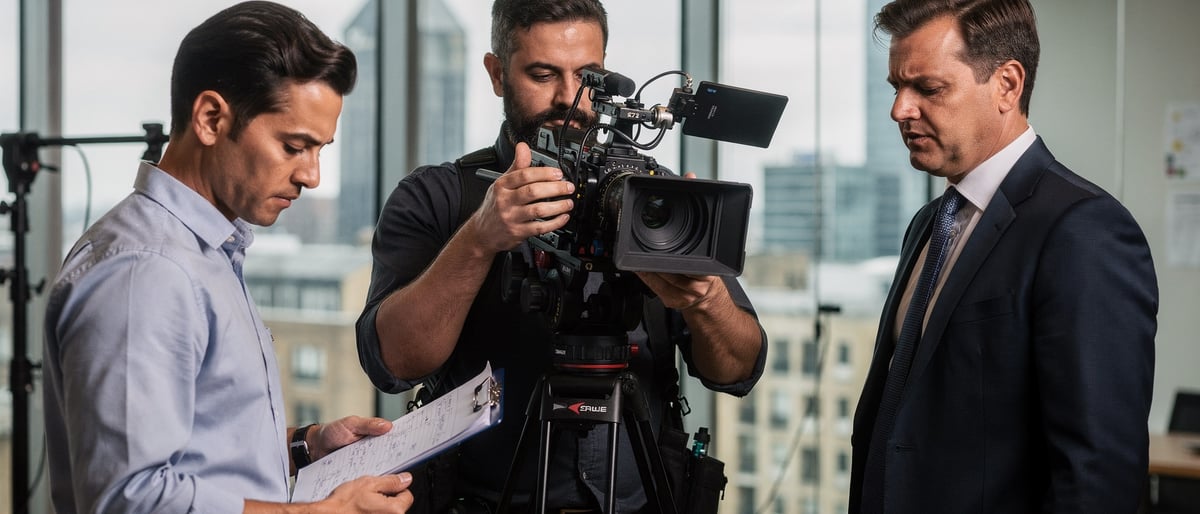
A marketing director called us on a Tuesday. She needed a filming space by that Friday. Four working days. The quarterly board deck needed a filmed CEO statement (her words), and the CEO's diary had one window: Friday afternoon.
We told her what was available. She thanked us, said she'd call back, and called three more studios. She found one. She took it. The CEO filmed on Friday.
The footage came back on Monday looking flat, the background composite barely held up on a second monitor, and the location had added ninety minutes of traffic each way to a crew day that was already tight. The budget was over by eighteen percent. She called us again.
"I didn't know availability would be this much of a problem," she said.
It always is. That's the lesson.
How studio availability actually works
Filming studios in London with a proper green-screen virtual studio capability are not like hotel rooms. They don't sit empty waiting for a four-day request to arrive. The decent spaces around the filming studios London Southbank circuit and central London are booked out weeks in advance by production companies, broadcasters, and corporate clients who plan their shoots the way they plan their quarters: at least a month out, often two.
When you call on Tuesday for Friday, you're buying whatever's left after everyone who planned properly took what they wanted. What's left is there for a reason. It's the slot another production cancelled at penalty cost, or the space that doesn't have the lighting grid you actually need, or the studio where the available crew is available because the experienced team is already committed elsewhere.
This is not conjecture. The pattern repeats with enough regularity that it's worth naming plainly: last-minute bookings cost more, deliver less, and create operational pressure that compounds into creative compromise.
The three things that erode when you book late
First, location quality narrows. The studios Southbank and central London clients prefer, the ones with the right light management, compositing infrastructure, and proximity to transport, book on a different cycle to the ones that exist to catch late demand. When you need a space in four days, you're choosing from a smaller pool, and pools that fill late skew toward the cheaper end for a reason.
Second, crew availability follows the same pattern. The gaffer who knows how to light a green-screen for clean-key compositing, the director with corporate interview experience, the sound recordist who can handle a corporate environment quietly. These people are working. Availability at four days' notice says something.
Third, pre-production collapses. A properly planned shoot includes a recce, a shot list the client has reviewed, a briefing for the presenter, and a checked run sheet. Five days compresses all of that into whatever fits. The briefing becomes a phone call. The recce happens the morning of the shoot. The CEO, who hasn't been prepped, learns what's expected of them on the day. That's where the flat performance comes from. Not the studio, not the crew. The missing preparation.
What a planned shoot looks like instead
Called on Tuesday for a Friday shoot, you pick from whatever slots are left, with a smaller studio pool, crew at short notice, and a recce squeezed into the morning of the day.
Booked six weeks out, the space is confirmed, the crew is locked, the CEO gets a prep pack, and graphics are tech-checked before the day so the footage lands first time.
A client who books six weeks out has time to confirm the space, lock the crew, send the presenter prep pack to the CEO's communications team, and run a tech check on graphics before the day. The studio has time to spec the setup correctly and flag any constraints before they become surprises on the morning.
The shoot day itself becomes straightforward. The CEO arrives knowing what to expect. The director has reviewed the script. The crew has done the recce. The composite background is agreed in advance, so there are no revisions in post.
The irony is that this version costs less. Not significantly less on the studio line, but measurably less in crew overtime, re-edits, and the management time spent managing a difficult result. And the footage lands on the first attempt.
The thing about the calendar
Most filming decisions are made well before a filming day is actually needed. The board presentation is on the calendar months before anyone books the studio. The product launch date is known before the production brief lands. The quarterly CEO address is not a surprise.
The gap between knowing when content is needed and booking the production is where the problem lives. For reasons that tend to be about internal approval processes, that gap is often six weeks or less when it should be twelve.
If you're in a marketing team, that's worth naming in a planning conversation: production needs a booking lead time the same as an event venue or a print run. When that lead time is treated as elastic, something that can be compressed when the calendar fills up. The compression costs money and quality in predictable ways.
What to do about it
Block your quarterly filming dates at the start of each quarter. Confirm studios and key crew before you confirm talent or scripts. If the CEO's diary is the constraint, work backwards from their availability to a production date at least four weeks out, not from the delivery deadline backwards into whatever's left.
That discipline buys you access to the right filming studios in London, the crew who knows the work, and a shoot day that runs to the brief rather than around its gaps.
It also means you stop calling on Tuesday for Friday, and starting the call with what went wrong.
If this sounds familiar, talk to us before the next quarter's content calendar locks. We can hold dates.
Frequently asked questions
How far in advance should I book a London filming studio?
Aim for at least four to six weeks, and twelve where you can. The better green-screen and virtual-studio spaces around Southbank and central London are booked weeks ahead by production companies and broadcasters who plan a quarter or two out.
Why does a last-minute booking cost more?
Late bookings cost more in crew overtime, re-edits, and management time. You also choose from a smaller, cheaper-skewing pool of studios and crew, and pre-production gets compressed into whatever fits.
What actually causes a flat on-camera performance?
Usually the missing preparation, not the studio or the crew. Without a recce, a reviewed shot list, and a presenter prep pack, the CEO learns what is expected on the day, and it shows.
What should a marketing team do to avoid this?
Block your quarterly filming dates at the start of each quarter, and confirm studios and key crew before talent or scripts. If the CEO's diary is the constraint, work backwards from their availability to a date at least four weeks out.
Can a planned shoot really cost less than a rushed one?
Yes. The studio line may not be much cheaper, but a planned shoot measurably reduces crew overtime, re-edits, and the management time spent fixing a difficult result, and the footage lands on the first attempt.