
I once approved a production quote with a line on it I didn't understand. I knew I didn't understand it. I signed anyway, because asking felt like admitting I shouldn't be the one signing.
The line was a day rate for a role I couldn't have defined if you'd asked me. It turned out to be necessary and fairly priced. That isn't the point. The point is that I'd handed over a decision because the words on the page were doing their job, which for a lot of production language is to make the person reading it feel like they shouldn't ask. I've since hired plenty of crews and I ask about every line now. Nothing bad has ever happened from asking. Something bad happened the one time I didn't.
The words are not the work
Here's the first thing worth knowing. The jargon makes hiring a crew sound more specialised than the decision actually is. It isn't a test of whether you know the vocabulary. The people quoting you use those words because they're shorthand among people who do this daily, not because you're supposed to arrive fluent.
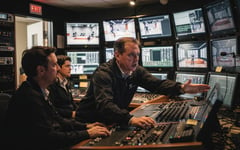
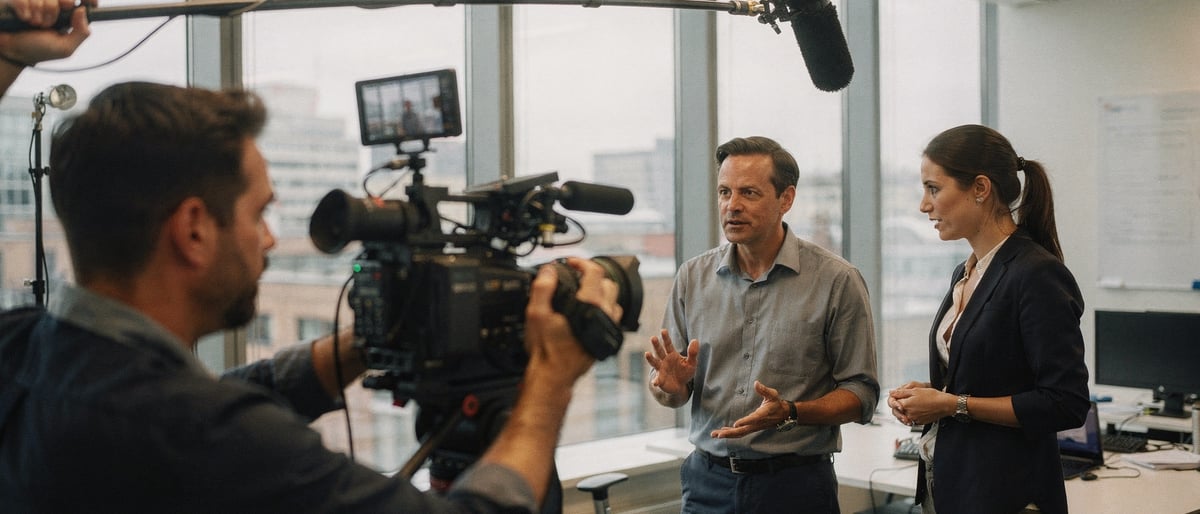
A film crew is a small number of people doing a small number of jobs. Someone runs the shoot and protects the budget and the day. Someone operates the camera and is responsible for how it looks. Someone owns sound, which is the thing audiences forgive last and you notice least until it's wrong. Someone handles light, which decides more about whether a film feels expensive than the camera does. On a bigger shoot those split into more roles. On a small one, two skilled people might cover all of it. Strip the titles away and that's the whole structure.
The vocabulary makes hiring a crew sound like a test. It's a small number of people doing a small number of jobs.
Three questions that do more than fluency ever will
You don't need the language. You need to know what the film has to achieve, roughly what you can spend, and when you need it. Those three answers are worth more in a hiring conversation than knowing every term on the call sheet, because a competent crew can translate the rest if you're honest about those three.
I learned to lead with them and to say plainly when I didn't follow something. The good crews answer in plain English without making you feel slow for asking. The ones that respond by reaching for more jargon are telling you something useful about what working with them will be like, and it's worth hearing early rather than discovering it in week three.
The reframe that changed how I hire
For years I thought the goal of a hiring conversation was to sound like I belonged in it. Get the words right, don't expose the gap, project competence.
You try to sound like you belong in the conversation, get the words right and hide the gap, so every question you skip turns into a surprise after you have paid.
You ask plainly about every line you do not follow, surface each gap while it is still cheap, and the better crews respect it because it makes their job easier.
The shoot I signed off blind taught me the opposite. The goal of the conversation is to surface every gap while it's still cheap. Every question you don't ask before you sign becomes a surprise after you've paid. Sounding like you know is the expensive way to hire. Asking like you don't is the cheap one, and the better crews respect it because it makes their job easier too.
What London rates and locations really mean
A practical note on London specifically. Rates and availability here move with the calendar and the location, so the same crew quoted twice can read differently depending on when and where you shoot. A studio near the Southbank in London is priced differently from a studio further out, and that difference is a fair thing to ask about rather than a thing to absorb in silence. None of that is hidden. It just doesn't get explained unless you ask, and the city is full of capable crews who will explain it without making you feel like you should have known.
Every question you don't ask before you sign becomes a surprise after you've paid.
How to start without pretending
You don't need to learn the words before you talk to anyone. That's the trap, and it keeps people stuck for months because they think competence is a prerequisite for the first conversation rather than the outcome of it.
Bring three things and you can hire a crew in London without bluffing once. What the film has to do for the business. The honest budget, the real one, not the brave one. The date, even if it's a window. A crew worth hiring can build the rest from those and will tell you, in words you understand, what they'd do and what it costs.
If that's where you are, with a film that matters and a quiet worry that you don't know enough to brief it properly, you know more than enough to start. Tell us those three things in plain language and we'll tell you, in plain language, what a sensible crew and budget looks like. No vocabulary required. That's rather the point of the whole thing.
Frequently asked questions
Do I need to learn film production jargon before hiring a crew in London?
No. A competent crew can translate the terms for you. You only need to know what the film has to achieve, roughly what you can spend and when you need it.
What are the core roles on a film crew?
Someone runs the shoot and protects the budget, someone operates the camera, someone owns sound and someone handles light. On a small shoot two skilled people might cover all of it.
What three things should I bring to a hiring conversation?
What the film has to do for the business, the honest budget rather than the brave one, and the date even if it is only a window. A crew worth hiring can build the rest from those.
Why do London crew quotes vary so much?
Rates and availability move with the calendar and the location, so the same crew quoted twice can read differently depending on when and where you shoot. A studio near the Southbank is priced differently from one further out.
How can I tell a good crew from a bad one?
Good crews answer in plain English without making you feel slow for asking. Ones that respond by reaching for more jargon are telling you something useful about working with them, and it is worth hearing early.