
The call came at 7:23 in the morning. The client's venue had flooded overnight. Not a drizzle: the entire ground floor was waterlogged and the facilities manager had sent everyone home. Their shoot was in eight hours.
I was already in the studio. I go in early on shoot days to run the floor checks myself. When the producer rang with the news, she was calm. Calm is the voice you use when panic would not help.
We had two options. Reschedule, which would cost the client their talent bookings, their crew fees, and the location deposit they would not recover. Or find a way to shoot that day.
Five hours and a standing set
There was a window from noon. Not a full day, but five solid hours. The set we had rigged the previous week was still up: a clean, dark executive environment that read as a boardroom without being tied to a specific room. The client needed a CEO interview, two product cut-downs, and a panel discussion recorded for internal distribution. Nothing on that list required a physical location.
I rang the producer back within twelve minutes. I told her what we had, what the set looked like, and what we could and could not deliver in the window. She asked one question: would it look as though they had staged a cancellation to escape the venue booking? I said no. I told her the lighting would differ from what they had planned, but it would be better. She agreed.
What followed is the part worth understanding.
Rebuilding the brief from scratch
A flooded venue, a lost deposit, exposed brick and warm practicals built around a single room, plus the lift, the generator and the shifting afternoon light.
A controlled set rigged to carry the same temperature and depth, with colour matched to the brief and every variable absorbed before the talent arrived.
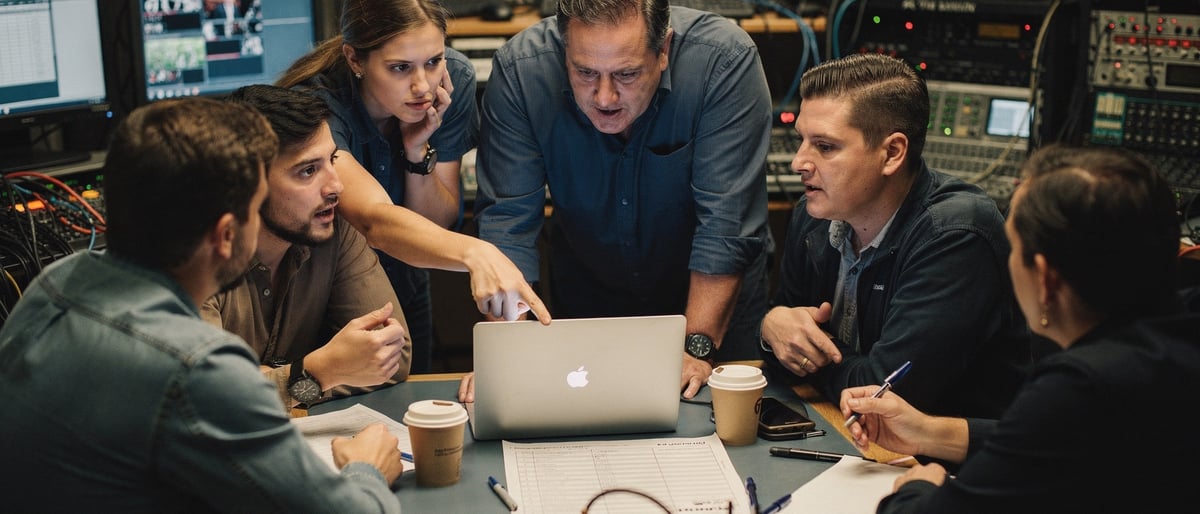
We had three hours between the call and the first talent arriving. The client's creative director had built the entire visual approach around the original venue: exposed brick, warm practicals, the kind of room that communicates heritage without announcing it. None of that was standing in the studio.
We rebuilt the logic of it.
The lighting technician pulled warm practicals and framed the background to carry the same temperature. The virtual environment gave us depth and controlled shadow that a bare room could not have matched. We aligned the colour temperature to what the creative director had referenced in his brief. By the time the CEO arrived, the only people in the room who knew this was not the original location were wearing headsets.
The CEO sat down, looked around, and said it reminded him of a private members club in Mayfair. That is the moment I come back to when clients ask what the better virtual studios in London can do that a well-chosen location cannot.
The answer is not always that the studio wins. The answer is that a controlled environment can reconstruct the qualities that mattered in the location brief, without the variables the location brings with it.
What the studio actually delivered
The shoot ran five and a half hours. Slightly over the window, but we absorbed it. Every shot was captured. The panel went in a single pass with no retakes. One cut-down needed a second take because the presenter stumbled on a product name. Nothing we had built failed.
The final cost was a studio day rate and crew fees. The client lost their venue deposit. What they did not lose was the talent schedule, the pre-production work, or the broadcast date their communications team had already briefed across the business.
There is a version of that morning where we tried to replicate the location exactly and could not. There is a version where we told the producer the window was too tight. Neither of those conversations happened, because the studio exists to make them unnecessary. The brief arrives. The environment is built around it. The camera finds what the client needs.
Why the room was never the point
This is what a well-run production studio does on the days it matters. It is not a green screen in a draughty warehouse. It is a controlled environment built to absorb the variables that location work carries as standard: the lift that only takes two people at a time, the generator that was not in the brief, the afternoon light that shifts an hour before wrap.
The brief that morning had assumed brick walls and warm lamp light would do the persuasive work. The brief was wrong, in the way briefs often are when they confuse the setting with the idea. The idea was a CEO speaking with authority about a product his company believed in. The room was never the thing.
We have run versions of this same pivot more times than I can easily count. Not always a cancellation. Sometimes it is a senior executive who cannot travel, a remote guest joining from another time zone, a location that read perfectly on the recce and looked nothing like it under late-morning light. Each time, the studio absorbs the variable. The production carries on.
Planning the studio option early
The client from that morning came back four months later and booked a full week. This time the planning was already there.
If you are producing corporate video and your location is carrying risk you cannot fully control, build the studio option into the plan before you need it. See what dates are available.
Frequently asked questions
Can a virtual studio really replace a cancelled location shoot on the same day?
Yes. In this case the team rebuilt the brief on a standing set in three hours and captured a CEO interview, two product cut-downs and a panel discussion in a five and a half hour window.
Will a virtual set look obviously different from the planned location?
Not when it is built around the brief. The lighting was matched to the creative director's referenced colour temperature, and the CEO compared the result to a private members club in Mayfair.
Is this just a green screen in a warehouse?
No. A well-run production studio is a controlled environment designed to absorb the variables location work carries as standard, not a bare green screen in a draughty warehouse.
What does switching to a virtual set save when a location falls through?
The client lost only their venue deposit. They kept their talent schedule, the pre-production work and the broadcast date their communications team had already briefed across the business.
How do I avoid being caught out by a location cancellation?
Build the studio option into the plan before you need it. If your location is carrying risk you cannot fully control, having the controlled environment ready means the production carries on regardless.