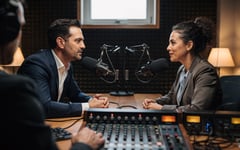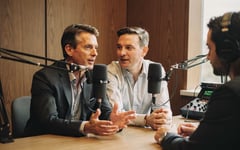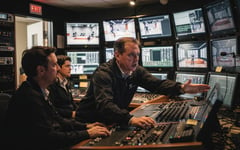

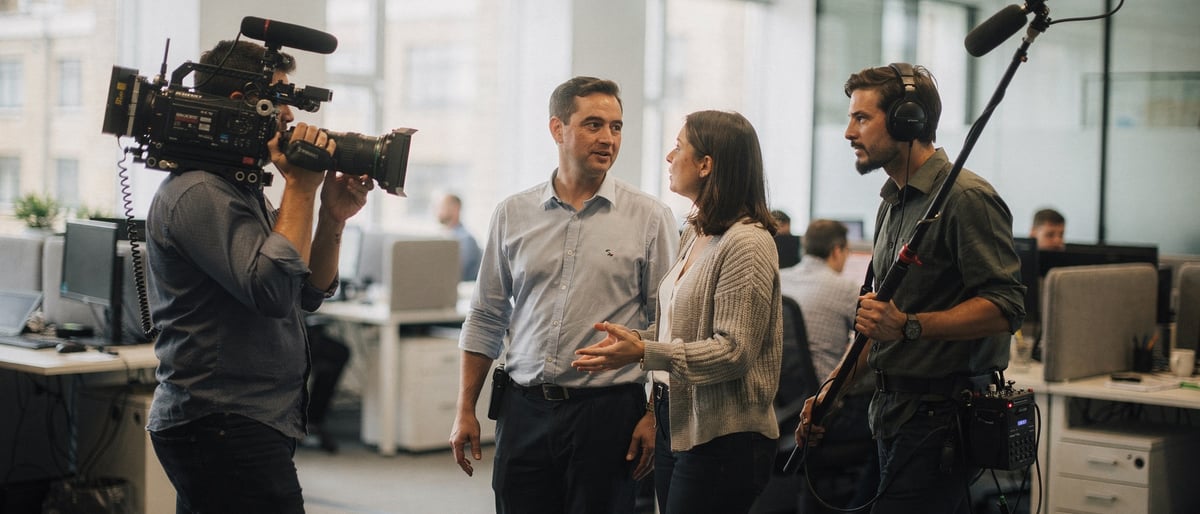
We booked a studio for a day and lined up four executives. One chair, one grey backdrop, one camera. Each one came in, sat down, answered the same six questions, left. By executive three I knew, watching the monitor, that we had made something nobody would finish watching.
We tested it anyway. We had paid for it. It scored worse than the slide deck it was supposed to replace. People stopped watching at around the eighteen second mark, which is roughly when the second talking head started saying the same kind of sentence as the first one in the same kind of chair.
That was the day I stopped defending the talking head and started asking why we keep filming it. The honest answer is that it is the easiest thing to schedule. It is also the easiest thing to ignore.
Why the talking head fails on camera
A person sitting still, looking just off-lens, telling you what they think, is the lowest information image a camera can produce. Nothing changes in the frame. There is nothing for the eye to do. The viewer's attention has to be held entirely by the words, and most corporate words are not strong enough to carry a static frame for ninety seconds.
The static talking head is the most common corporate video a London business will commission, and the most reliably ignored. We treat it as the safe option because it feels controlled. The executive is on message, the room is tidy, nothing can go wrong. Nothing going wrong is not the same as something landing. A film where nothing can go wrong is usually a film where nothing happens, and a film where nothing happens is the kind audiences scroll straight past.
There is a tell. If you could deliver the entire film as an email and lose nothing, you did not need a film. You needed an email. The talking head fails that test almost every time.
What the camera is actually for
A camera is a machine for showing, not telling. It earns its cost on the things words cannot do on their own. A process happening. A hand on a product. A real customer's face changing as they answer a question they were not coached on. The thing your company makes, working, in front of you.
I went back through the footage that tested well across two years of our own films. Almost none of it was a person explaining a thing. It was people doing the thing, and a voice over the top giving it meaning. Showing is slow to set up and harder to brief. It is also the only part of the budget that the camera was ever the right tool for.
So before the next shoot, run one question over the brief. Not "who should be on camera", but "what can the camera show that I cannot just write down". If the honest answer is nothing, cancel the shoot and send the email. If the answer is a process, a product, a place, a transformation, now you have a film.
Do this instead
A static executive in a chair, on message and tidy, reading the verdict on the work to camera for two minutes.
The work itself filmed where it happens, with the executive in short voice over proving the point as they make it.
Film the work, not the verdict on the work. Put the camera where the thing happens. The engineer at the bench, not the engineering director in a chair describing the bench. The customer mid-install, not the case study read out. The product mid-test, not a person assuring you it passed.
Then use the executive properly. Not seated and static for two minutes, but in voice over and short, where their words sit on top of footage that proves the point as they make it. The eye watches the work. The voice carries the meaning. That combination holds attention for as long as the work stays interesting, which is far longer than a grey backdrop ever managed.
Why a controlled space wins
Grabbing footage on location means weather risk, no time to get the demonstration right, and trading control for life.
A London studio lets you build what you want to show with flattering light, time to get it right, and no day lost to weather.
This is also where a controlled space pays for itself, and it surprises people that the answer is not "go on location". A studio in London lets you build the thing you want to show with light that flatters it, time to get the demonstration right, and no weather risk eating the day. You are not trading control for life. You are getting both, because you can set the work up properly instead of grabbing it on the run.
There is a cost to ignoring this, and it is not the shoot day. It is every prospect who watched eighteen seconds of an executive in a chair and decided your company was as forgettable as the last three that sent them the same film. Attention is the thing you are actually buying when you commission video. The talking head spends the budget and buys none of it.
What changed when we reshot
We reshot the four-executive film as one piece built around the product working, with two of those same executives in voice over. It held to the end in testing. The executives had not improved. We had stopped asking them to carry a frame that was working against them and started letting the camera do the one thing it is for.
Before your next corporate film, do the email test on the brief. If a written version would lose nothing, you have saved yourself a shoot. If it would lose the thing that only the camera can show, you finally have a film worth making.
If you want a second read on a brief before it becomes a shoot, send it over and we will tell you honestly whether there is a film in it or just an email with a budget attached. No pitch, just a straight answer, which is more than the grey backdrop ever gave you.
Frequently asked questions
What is wrong with a corporate talking head video?
A person sitting still and looking off-lens is the lowest information image a camera can produce. Nothing changes in the frame, so attention rests entirely on the words, and most corporate words cannot carry a static shot.
How do I know if I actually need a film at all?
Run the email test on the brief. If a written version would lose nothing, send the email and cancel the shoot. If it would lose a process, product, place or transformation that only the camera can show, you have a film worth making.
What should the camera film instead of executives?
Film the work, not the verdict on the work. Put the camera where the thing happens, such as the engineer at the bench, the customer mid-install or the product mid-test, rather than someone in a chair describing it.
How should executives be used on camera then?
Use them in voice over and keep it short, so their words sit on top of footage that proves the point as they make it. The eye watches the work while the voice carries the meaning.
Why film in a studio rather than on location?
A controlled studio lets you build the thing you want to show with light that flatters it, time to get the demonstration right, and no weather risk eating the day. You get control and life, not one traded for the other.