
Panels sag in the middle. Almost without exception. The opening ten minutes run well because everyone's concentrated and the questions are fresh. The final ten run well because the finish line is in sight. The middle is where you lose the room.
I've run enough panels to know exactly when it happens, and it's always the same sequence. A question that runs long. An answer that repeats what's already been said. A silence the moderator fills with a follow-up to the same speaker. By the time that sequence plays out twice, half the online audience has drifted and the room is looking at their phones.
The fix isn't just a moderation fix. It's a production fix.
Why the sag has a structure
A panel loses energy in the middle for reasons that are partly human and partly visual.
The human reason: the first round of questions has established the dynamic. The audience has formed opinions about which speakers they want to hear from. By the midpoint, they're waiting for something to change. When nothing changes, they stop waiting and start looking for something else to do.
The pattern is predictable. A speaker who's already answered two questions doesn't have a third distinct answer to give; they're refining the same point. The moderator, sensing the energy dropping, calls on them again because they're reliable. The reliable speaker repeats themselves at length. The audience stops listening.
The visual reason reinforces all of this. Nothing has changed on screen. The cameras are in the same positions. The same speakers are in the same seats. The moderator is using the same framing. When the eye has nothing new to track, attention follows. A viewer watching a locked-off camera on an unchanged set doesn't need to stay alert. They already know what they're looking at.
Most panels don't address either of these things at the midpoint. They push through and hope the content is strong enough to carry it. Sometimes it is. Usually it isn't.
What we change at fifteen minutes
Most panels push through the midpoint and hope the content is strong enough to carry it. Sometimes it is. Usually it isn't.
A deliberate intervention at the midpoint: the camera configuration shifts, supporting content comes out, and the moderator runs a prepared lane change.
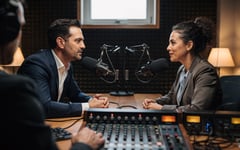
In a panel we produce in our studio, there's a deliberate intervention at the midpoint. The exact form varies by event, but the structure is consistent.
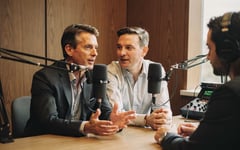
The camera configuration shifts. If the opening third ran wide, the middle runs tighter: two-shots, close-ups on the speaker making the most active contribution, cutaway reactions. The visual pace increases without the content changing. The audience's eye has somewhere to go.
If there's a data point, a case study, or a piece of supporting content in the run sheet, it comes out here. A graphic, a short clip, a figure on screen. Something that breaks the visual pattern and gives attention a new anchor point.
The moderator also has a prepared lane change for this moment: a question aimed at a speaker who hasn't been featured in the last three minutes, or a direct pivot to a tension the opening section raised but didn't resolve. Not “and what do you think?” but something that requires a specific answer from a specific person.
None of this is improvisation. It's pre-planned, built into the run sheet, and rehearsed. That's what makes it work when the camera is live.
The studio control that makes it possible
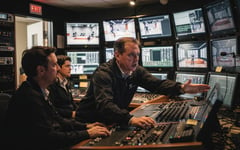
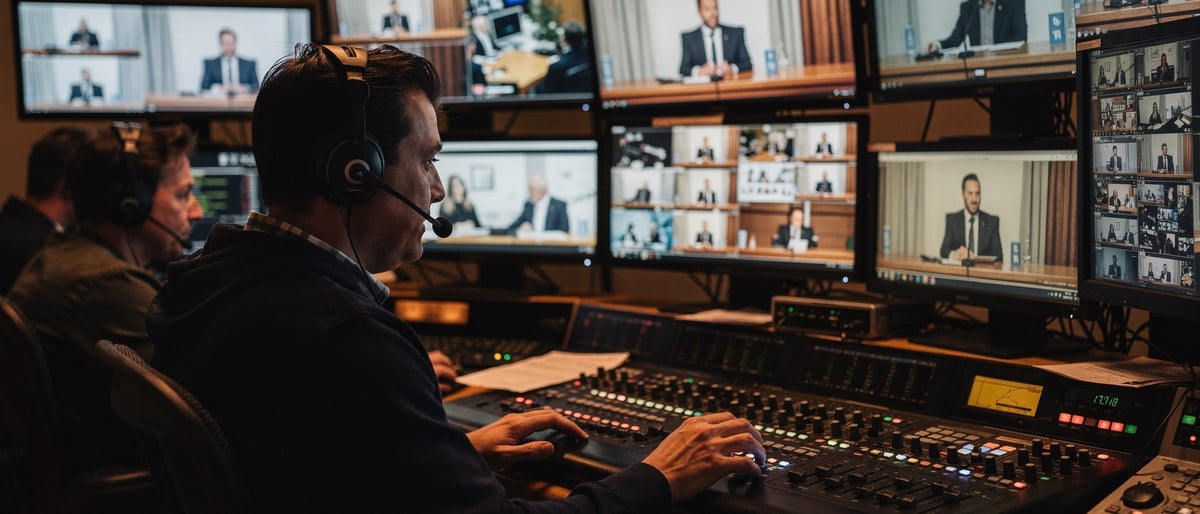
In a studio setup, the director is an active participant in keeping the panel moving. Cutting between cameras in real time, dropping in graphics at the planned moment, adjusting coverage as the conversation shifts: these are production decisions that either support or undermine the moderator's work.
A panel in a conference room with a single locked-off camera gives the director no options. When the moderator loses the thread, the camera can only point at the problem.
A studio setup gives the director the same toolkit as broadcast: planned camera blocking, ready graphic triggers, and coverage that responds to the room.
That control matters. A panel run in a conference room with a single locked-off camera doesn't have these options. When the moderator loses the thread, the director can only point the camera at the problem. There's nothing else available.
The virtual studios london setup we use for panel work gives the director the same toolkit as broadcast. The camera blocking is planned, the graphic triggers are ready, and the coverage can respond to what's actually happening in the room. That's not a luxury. It's what separates a panel that holds its audience from one that loses half of them by the twenty-minute mark.
The rehearsal is not for the content
I say this before every panel: the rehearsal is not for the content. The speakers know their content. The rehearsal is for the production.
Where does the moderator stand when they want to redirect a speaker who's running long? How does the director signal the graphic is ready? What does a lane change look like physically, so the audience sees a shift rather than an interruption?
Those are the questions the morning rehearsal answers. Not inspiration. Not hoping the conversation finds its own energy. A run sheet that anticipates the drop and builds in the intervention before it's needed.
The best panels look effortless. They look that way because the production has done the work that makes the middle feel like the first ten minutes, when everyone's still fresh. That's not accidental. It's planned.
What the audience actually experiences
If the production has done its job, the audience doesn't notice any of this. The panel moves. The energy doesn't flatten at eighteen minutes. The final third runs as well as the first.
That's the goal: not a panel that survives the middle, but one where the middle holds. Where the people who joined online are still watching. Where the questions at the end come from an audience that has been present throughout, not from the handful who stayed out of obligation.
A panel that doesn't sag in the middle doesn't happen because the speakers were exceptional. It happens because someone thought about what the production needed to do to stop the sag before it started.
[Talk to us about your next panel format.]
Frequently asked questions
Why do panels lose energy in the middle?
The first round of questions sets the dynamic, so by the midpoint the audience is waiting for something to change. When nothing changes on screen or in the conversation, attention drifts. It is partly human and partly visual.
What changes at the fifteen-minute mark?
The camera configuration tightens to two-shots, close-ups and cutaway reactions, any supporting graphic or data point comes out, and the moderator pivots to a speaker who has not featured recently. The visual pace increases without the content changing.
Why does a studio setup matter for a panel?
In a studio the director can cut between cameras in real time, drop in graphics at the planned moment and adjust coverage as the conversation shifts. A single locked-off camera in a conference room has none of these options.
What is the morning rehearsal actually for?
Not the content, which the speakers already know. The rehearsal is for the production: where the moderator stands to redirect a speaker, how the director signals a graphic is ready, and what a lane change looks like so the audience sees a shift rather than an interruption.
What should the audience notice if it works?
Nothing. If the production has done its job the panel simply moves, the energy does not flatten at eighteen minutes, and the final third runs as well as the first.