

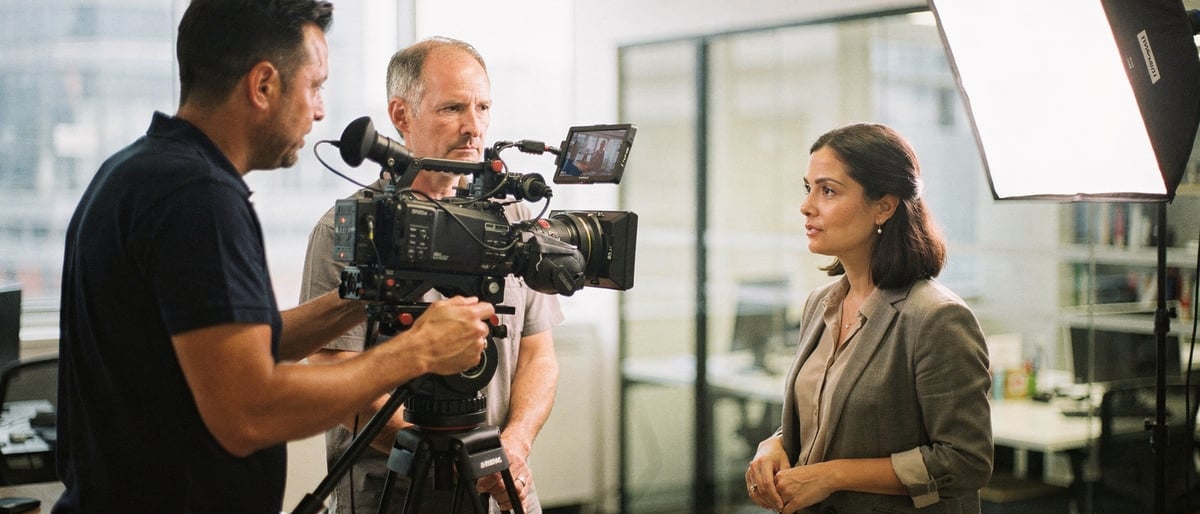
A marketing director showed me the company's new brand film last month. Two hundred and fifty thousand pounds of production budget, a director brought in from luxury fashion, locations in three countries. The film had accumulated four thousand views in six weeks, sixty per cent of them from inside the company. She wanted to know what had gone wrong.
Nothing had gone wrong with the production. The cinematography was excellent. The grade was expensive and it looked it. What had gone wrong was the brief, and it had gone wrong before anyone had picked up a camera.
This is the pattern I encounter most often in the corporate video London market. Not incompetent production, not careless agencies. A mismatch between what the budget was meant to buy and what the brief actually asked for.
The prestige brief
When I read the brief that had produced the film, it contained one discernible goal: make something we are proud of. It named a competitor's recent brand work approvingly. It asked for the feeling of an international company. It mentioned award-winning creative.
Ambition is not the problem. The problem is that "something we are proud of" is not an audience. It is not a behaviour change. It is not a measurable outcome. It is a feeling the client wants to have about the production, and that feeling has almost nothing to do with whether a prospect watches thirty seconds of the film on LinkedIn and decides to book a call.
A film built for internal pride will optimise for internal approval. It will look beautiful. It will feel significant. It will almost certainly fail the person watching it in a meeting room who has no prior knowledge of the brand and no particular reason to care. The people who approved the brief will call the film a success. The people who were meant to act on it never will.
What the audience actually decides
Research on B2B buying behaviour consistently shows that buyers do not respond to production value in isolation. They respond to specificity, relevance, and evidence that the supplier understands their situation.
A film shot in three countries signals budget. It does not signal understanding. It does not answer the question the prospect is actually asking, which is: have you solved this for someone like me? A tight, well-made film that runs two minutes and answers that question clearly will outperform a flagship brand piece that answers none of them.
The films that generate business outcomes are specific. They name the type of organisation served. They name the problem solved in plain language. They show someone recognisable saying something real about the experience of working with the company. Production values matter as a threshold, not a competitive advantage. Above a basic standard of professional quality, additional spend does not produce proportional results.
The brief that produces value
A useful brief starts with one question: what do we want someone to do differently after watching this? Not feel differently. Do differently.
If the answer is "book a discovery call", the film needs to make booking a discovery call feel like the obvious, low-risk next step. It needs to reduce the fear of getting it wrong, because fear of the wrong decision is what keeps most buyers from making any decision.
If the answer is "shortlist us for a tender", the film needs to give the procurement team specific language to justify the choice internally. Those are very different films and they require very different briefs. Most budgets are wasted at this point: the answer to the "what should someone do next" question is left implicit, so the production team optimises for what they can see and measure, which is how the thing looks.
The solution is not a more expensive production. It is two hours in a room with the sales team before writing a single word of the brief.
The cost of the wrong film
A £250,000 film that generates four thousand views and zero attributable pipeline has not just wasted its production budget. It has wasted the production budget plus the opportunity cost of what that money could have bought as a series of precise, targeted pieces that a salesperson could deploy in every proposal conversation for three years.
A £250,000 brand film built for internal pride, shot in three countries, that drew four thousand views and zero attributable pipeline.
A series of two-minute case study films, a fraction of the budget each, with a known audience and a clear next action.
The company I described is now commissioning a series of two-minute case study films. The budget per film is a fraction of the brand piece. They know exactly who the audience is. They have a clear view of what they want those people to do next. The brief is three paragraphs, not thirty slides.
That is the company that will see a return on its video investment. The lesson is expensive to learn directly. It is also available to anyone willing to examine the brief before the production.
If you are about to commission a corporate video and want a conversation about the brief before anyone pitches, talk to us first.
Frequently asked questions
Why did an expensive agency video still look cheap?
The production was not the problem. The brief was. A film built for internal pride optimises for internal approval, so it looks beautiful but fails the prospect who has no prior reason to care.
Does higher production spend mean better results?
No. Above a basic standard of professional quality, additional spend does not produce proportional results. Production values matter as a threshold, not a competitive advantage.
What makes a corporate video brief actually work?
Start with one question. What do we want someone to do differently after watching this? Not feel differently, do differently. The brief should make that next step feel like the obvious, low-risk choice.
What kind of film generates real business outcomes?
Specific ones. They name the type of organisation served, name the problem solved in plain language, and show someone recognisable saying something real about working with the company.
What is the true cost of the wrong film?
The wasted production budget plus the opportunity cost of what that money could have bought as precise, targeted pieces a salesperson could deploy in every proposal conversation for three years.