
She emailed me the morning after her company's annual conference, and the subject line was just three words: "Nobody clocked it."
I had to read the message twice. Her firm runs a results day every year, the kind with a hired room near Bank, a riser, a lectern, a man with a clipboard at the door. This year she'd quietly moved the whole thing into a virtual studio in London and streamed it. Same CEO, same slides, same forty minutes. The board watched from their desks and their hotel rooms and, in one case, a kitchen in Frankfurt. Not one of them asked where the venue had gone.
That email sat with me for days. Not because the trick worked. Because of what it told me about the thing it replaced.
When the room stopped being the point
I'd spent years assuming the room was the point. You book the space, you fill it, the size of the audience tells you the event mattered. Then you watch the recording afterwards and it looks like every other recording of every other conference room: a small figure on a wide stage, lit from the ceiling, sound bouncing off the back wall. The event felt big in the room. On screen it shrank.
What a virtual studio actually changes
A hired room near Bank, a riser, a lectern, a CEO shrunk to a small figure on a wide stage, lit from the ceiling, sound bouncing off the back wall.
A close camera, light shaped to the speaker's face, a backdrop you control, the founder looking straight down the lens at one person on a phone.
Here is the part people get wrong. They think a virtual studio in London is a cheaper version of a stage. It is not a cheaper version of anything. It is built for the place most of your audience already is, which is a screen, on their own, half-distracted, deciding within seconds whether to keep watching.
A stage is designed for the back row of a room. A studio is designed for the front of a phone.
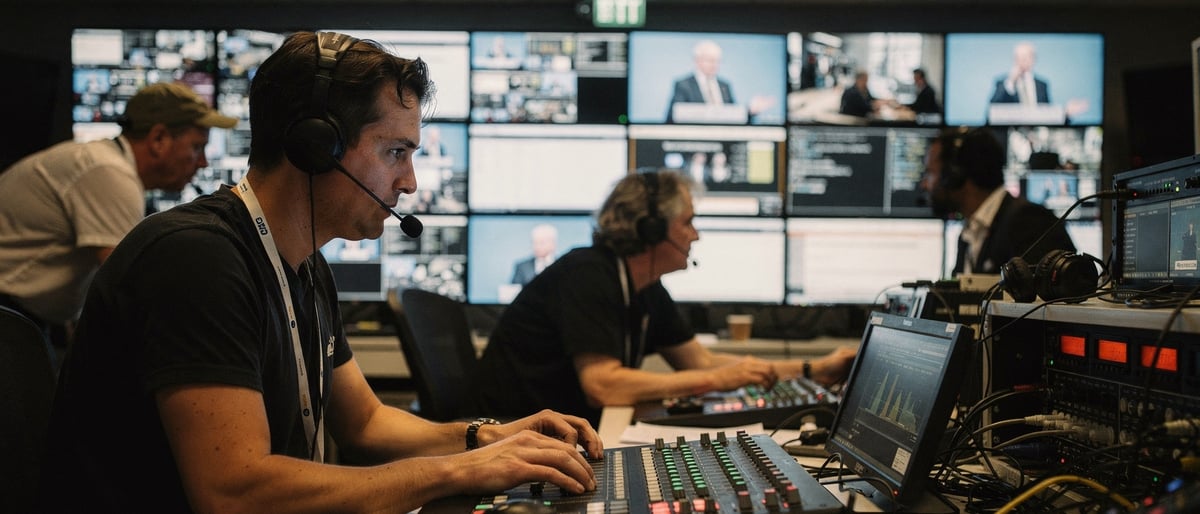
That sounds like a small distinction until you sit in the gallery during a take. The camera is close. The light is shaped to the speaker's face, not flooded across a platform. The background can be your product, your data, your city skyline, or nothing at all, and it changes when you want it to. The CEO is not a dot. They are a person, looking at you, in your eyeline. The first time a client watched their own founder back in that format, she went quiet, then said the thing I now hear constantly: "He's never looked like that before."
He had always looked like that. The room had just been hiding it.
The number that ended the venue debate
I used to lose the budget argument with finance teams every time, because I was arguing about cost and they were always going to win that. A studio day looked like a line item next to a venue they could picture. Then a marketing director I work with did something I should have done years ago. She did not compare the studio to the room. She compared it to the silence after the room.
The old keynote reached the 90 people who turned up and the handful who clicked the recording before it went stale by Friday.
The studio keynote, same speaker and script, went out live to just over 4,000 and kept being watched for weeks as standalone cuts.
Her old keynote reached the 90 people who turned up and the handful who clicked the recording before it went stale. Her studio keynote, same speaker, same script, went out live to just over 4,000 people and kept being watched for weeks because it was cut into pieces that worked on their own. The expensive thing was never the studio. The expensive thing was building a brilliant forty minutes and letting it die in a room by Friday.
That is the fear worth naming out loud. Not that a virtual studio in London costs money. That the ballroom version costs more and you only find out months later, when the video does nothing and nobody can quite say why.
Why London brands are doing this quietly
The "quietly" part is deliberate, and it is the bit I find most telling. The comms leads doing this are not announcing it. They are not putting "filmed in a virtual studio" on the invite. They have worked out that the audience does not care how it was made. The audience cares whether it holds them. So the brands move the keynote, keep the announcement boring, and let the only visible change be that the thing looks sharper and travels further than it used to.
I asked one of them why she had not told her own team it was a studio until afterwards. She said something I keep repeating to clients who are nervous about it. "If I had called it a studio, everyone would have had an opinion about studios. I called it the keynote. Then I just made the keynote better."
There is a quiet competitive thing happening here too. The brands moving first are not waiting for everyone else to validate it. They have noticed that a polished, on-camera leader who turns up everywhere a phone reaches is starting to make the ballroom keynote look like what it is: a lot of effort for a room that empties at six.
What I'd actually do first
If you run keynotes and any of this lands, do not rebook a venue you have not questioned. Take your next internal or investor session, the one you would normally put on a stage, and price the two versions side by side. Not just the venue against the studio. The full reach. How many people see it live, how many watch it later, how many usable pieces of content come out of one filmed day versus one room you rented for an afternoon.
You will likely find what the woman who emailed me found. The cheap option was never the room. It only looked cheap because the cost arrived later, as a recording nobody watched.
If you want to see what your next keynote could look like before you commit anything, the easiest first step is to come and stand on the set. See studio availability and we will block an hour to walk you through a real take, your slides, your skyline, your call on whether the room was ever the point.
Frequently asked questions
What is a virtual studio keynote?
It is your keynote filmed and streamed from a studio in London rather than delivered to a hired room. The same speaker and slides are shot close, lit for camera, and built for people watching on a screen.
Is a virtual studio just a cheaper stage?
No. It is not a cheaper version of anything. It is built for where most of your audience already is, which is a screen, on their own, deciding within seconds whether to keep watching.
Will a studio keynote reach more people than a venue event?
It can reach far more. One client's room keynote reached about 90 attendees, while the same script from a studio went out live to just over 4,000 and kept being watched for weeks as separate cuts.
Why do brands keep the studio move quiet?
Because the audience does not care how it was made, only whether it holds them. Comms leads keep the announcement boring and let the only visible change be that the keynote looks sharper and travels further.
How do I work out if a studio is right for my next keynote?
Price the two versions side by side. Compare the full reach, not just venue against studio, including live viewers, later views and how many usable pieces of content come out of one filmed day.