

Three years ago, a marketing director brought me a video her team had made. She was proud of it. Shot on an iPhone, natural light from a tall window, cut in iMovie. It told the story she needed it to tell. She wanted to know why it wasn't working.
I watched it twice and gave her the honest answer: the story was there. The storytelling wasn't.
That distinction took me a while to explain. It turned into the clearest account I've found for what a professional corporate video team actually does that an internal one usually cannot.
It is not about the kit
The iPhone was fine. The window light was fine. Most internal teams in mid-sized companies now have access to cameras, audio equipment, and editing software that would have counted as professional-grade five years ago. The constraint is not equipment.
The constraint is almost always the same three things: the interview, the structure, and the ask.
The interview
A colleague holds the camera and asks the questions. Both of them know too much, so the subject skips the context that would make a stranger care.
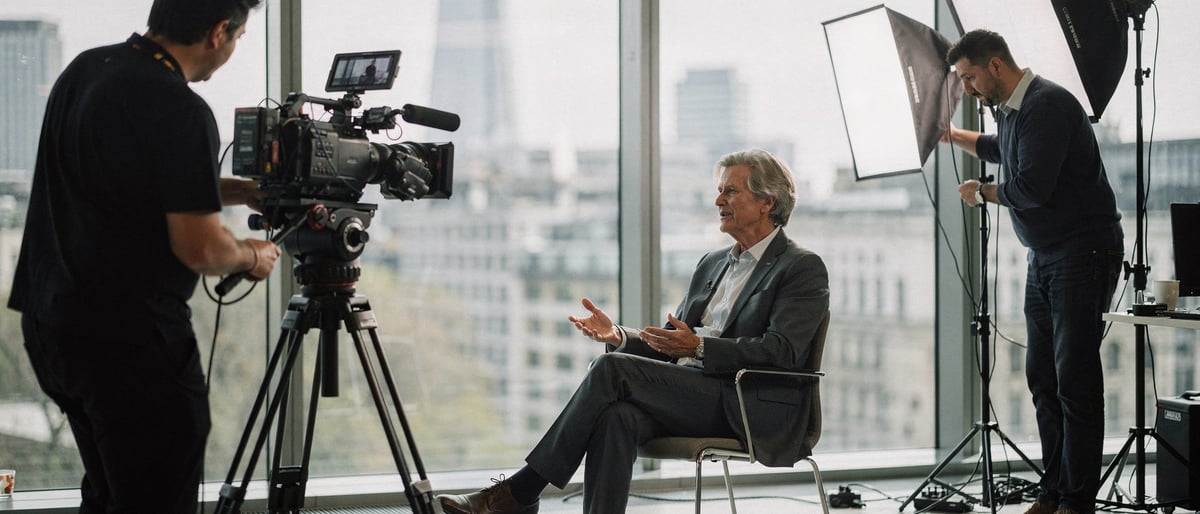
A director with professional distance does not know why the product matters. That ignorance forces the subject to explain it from the beginning, for an audience who was not in the meeting.
Filming a colleague is not the same as interviewing a subject you have professional distance from. When someone who knows the person holds the camera and asks a question, something breaks: both of them know too much. The interviewer fills in gaps the viewer cannot fill. The subject skips the context that would make a stranger care.
The result is footage that plays well in the room and nowhere else.
A professional director does not know why a particular product matters. That ignorance is useful. It forces the subject to explain the thing, from the beginning, in language that means something to an audience who was not in the meeting. I've watched a skilled interviewer pull forty minutes of usable material from a subject who had told their in-house team they had nothing interesting to say.
The structure
Every film tells a story. The question is whether it was planned before the filming or found in the edit.
Internal teams typically film first and build the narrative afterwards, hoping the story turns up in the edit.
The story architecture is built before the camera turns on, so the filming becomes the execution of a plan, not the starting point for one.
Internal teams typically film first and build the narrative afterwards. This works when the footage is rich and the editor is strong. More often, it produces something that covers all the bases in the brief and carries none of the momentum that makes someone finish watching.
When we work on corporate video in London, we build the story architecture before the camera turns on. What's the one thing we want the viewer to believe at the end? What do they need to hear first for that to land? What can we cut? The filming becomes the execution of a plan, not the starting point for one.
For the marketing director's video, the structure was chronological: here's what we did, here's what happened, here's the result. It's a reasonable instinct. But chronological isn't the same as compelling. The payoff came ninety seconds in; the viewer had already left.
The ask
Most internal teams are too close to their subject to frame the call to action clearly. They know what they want the audience to do next but they trust the audience to work it out. Good corporate video in London, made to convert rather than just communicate, builds the ask into the structure from the start. Not a line at the end, but a thread through the whole piece.
The ask is not "contact us." The ask is a specific thing the viewer now knows they should do, that they didn't know before watching the film. Getting that right requires an outside view of what the viewer already knows and what they still need to be convinced of.
Internal teams often resolve this problem by removing the ask entirely, which produces a film that informs but does not move. A viewer who finishes watching and thinks "that was interesting" has not been converted. A viewer who thinks "I should call them" has. The difference is the ask, and the ask is something an outside eye sets up from the first scene.
What changed when she came back
The marketing director came back six months later with a brief for a client testimonial series. Her team produced the footage. We handled the edit and the re-interview.
The difference in that piece was not production quality. It was a second conversation with the subject, led by one of our directors, that pulled three minutes of material the original shoot hadn't surfaced. The story changed completely. A detail mentioned in passing during the re-interview became the opening of the film.
That film has run on their site for eighteen months and still generates the calls she needs.
The one thing that matters
Capability in corporate video is not about what your team can film. It's about what they cannot see: the gap between what you know and what a stranger needs to hear before they trust you enough to act.
Professional corporate video london teams are paid to see from the outside. That's not something you develop in-house. It's a perspective you bring in.
If you want to see how we approach a brief, we do working consultations most weeks with no obligation. Bring what you have and we'll tell you honestly what it needs.
Frequently asked questions
Do I need professional kit to make a good corporate video?
No. Most mid-sized teams already have cameras, audio and editing software that would have counted as professional-grade a few years ago. The constraint is rarely the equipment.
Why can't our internal team interview our own people well?
Filming a colleague is not the same as interviewing a subject you have professional distance from. When everyone in the room knows too much, the subject skips the context a stranger needs to care.
What is the difference between a story and storytelling?
The story is what happened. Storytelling is the structure and the ask that make a stranger finish watching and act. A film can have the story and still fail at the storytelling.
Should the narrative be planned before filming or found in the edit?
Plan it before the camera turns on. Decide the one thing you want the viewer to believe at the end, then work out what they need to hear first for it to land. The filming becomes the execution of that plan.
What does it mean to build the ask into a video?
The ask is a specific thing the viewer should do, threaded through the whole piece rather than tacked on at the end. It needs an outside view of what the viewer already knows and what they still need to be convinced of.