

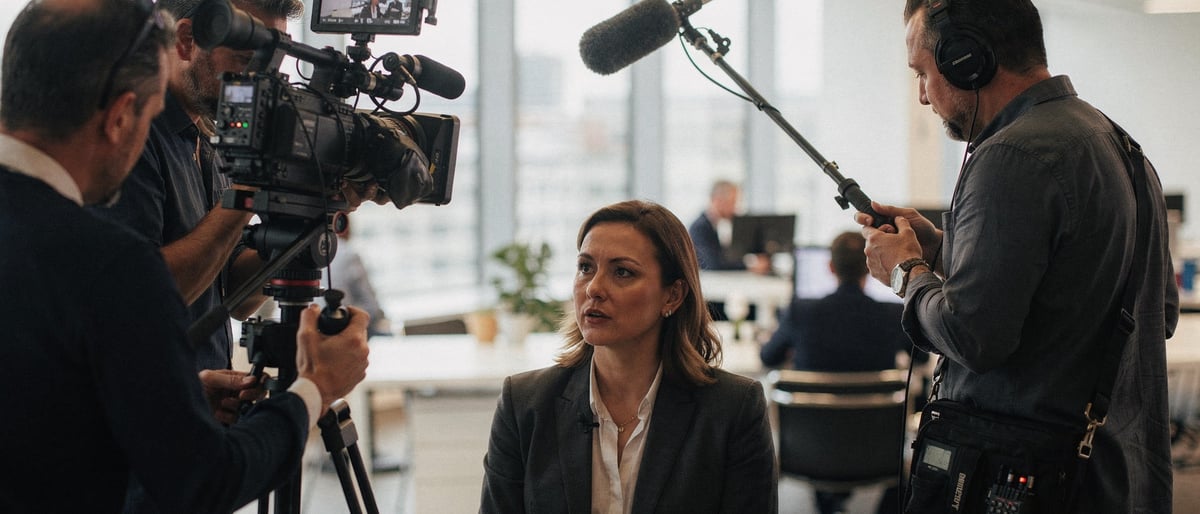
A buyer told me, more or less to my face, why we lost the contract.
It was a post-mortem coffee, the kind you take when the deal is gone and you want to know why so it does not happen twice. He was decent enough to be honest. He said our proposal was the stronger document. Then he said the winning firm had felt like the obvious choice for months before the tender even opened, because every time he had a question about the problem, their answer was already on his screen.
He had never met them in a room. He had watched them. That distinction cost us the contract, and it has shaped how I look at corporate video in London ever since.
The market is being taken on screen, quietly
I went and looked properly at what that firm was doing. It was not a big-budget campaign. There was no glossy hero film. There were three plain moves, repeated, while their competitors, including my client, stayed invisible between sales meetings.
The uncomfortable part is that none of the three needs a large budget. They need a decision and a camera in the right hands. The firms doing this are not richer than you. They are earlier than you, and earliness compounds.
The buyer in that coffee was describing something I have now watched play out in pitch after pitch. Buyers build the shortlist before they ever speak to a salesperson, off whatever the company has put on screen. By the time you are in the room, the verdict is mostly written. Video is how the firms winning right now get a vote before the room.
He had never met them in a room. He had watched them. That distinction cost us the contract.
The three moves, plainly
The first move is the answer video. Not a brand film. The actual question a real client asked last week, answered to camera in two minutes by the person who knows, filmed in an afternoon, sent before the prospect has finished forming the question themselves. The winning firm had dozens of these. My client had a homepage sizzle reel from 2022, and the gap between those two libraries was the gap that lost the deal.
Then there is the proof reel. Short, unpolished footage of the work happening. Not a testimonial where a client reads a script, but the work itself, on screen, so the buyer sees competence rather than reads a claim about it. People believe what they watch you do far more than what you write about doing, and a buyer who has watched you work has half-decided before the meeting is booked.
The third is the one almost nobody sustains. The same expert, the same topic, every couple of weeks, until the market files them as the person who knows that thing. It is consistency rather than production value that does the work here. One credible person, on camera, often, beats a single expensive film that runs once and disappears, because the market remembers a face it keeps seeing and forgets one it saw a year ago.
A homepage brand film from two years ago, the leadership team invisible between sales meetings, a buyer's shortlist forming with your name nowhere on the screen.
A steady stream of short answer videos and proof footage, the same expert recognised across the market, your firm already on the shortlist before the tender opens.
Before: a homepage brand film from two years ago, the leadership team invisible between sales meetings, a buyer's shortlist forming with your name nowhere on the screen.
After: a steady stream of short answer videos and proof footage, the same expert recognised across the market, your firm already on the shortlist before the tender opens.
None of those three is expensive. The answer video is a half-day. The proof reel is a crew capturing work you are doing anyway. The recurring face is a standing studio slot in the diary. What stops most companies is not money. It is the belief that video has to be a big rare event, so it never gets scheduled, so the firm stays silent while a competitor speaks every fortnight.
What you lose by staying invisible
Here is the loss, stated plainly, because it is easy to underrate. Every quarter you are not on screen, a competitor is, and they are not just gaining attention. They are pre-deciding shortlists you will never be told you were left off. You do not get a post-mortem coffee for those. You simply notice, over a year or two, that the deals you used to see are not reaching you, and by then the market has filed your competitor as the obvious choice and you as the firm they had to be reminded existed.
That is recoverable, but it gets more expensive the longer it runs, because you are no longer competing on the work. You are competing against a head start someone else compounded while you waited for the right time.
Booking the first recording day
The right time was eighteen months ago. The second-best time is a single recording day where you get the first batch of answer videos and proof footage in the diary, then a repeatable slot so the recurring face actually recurs. We run these as compact studio days in London precisely so the cost and the calendar stop being the excuse.
Bring the five questions your prospects always ask before they buy. We will turn them into the first five videos your competitor wishes you were not making.
Frequently asked questions
What are the three video moves described here?
The answer video, which replies to a real client question to camera in two minutes. The proof reel, short unpolished footage of the work happening. And the recurring face, the same expert on the same topic every couple of weeks.
Do I need a big budget to start?
No. The answer video is a half-day, the proof reel captures work you are doing anyway, and the recurring face is a standing studio slot in the diary. What stops most firms is treating video as a rare event rather than money.
Why does video influence which firms win contracts?
Buyers build the shortlist before they ever speak to a salesperson, off whatever the company has put on screen. People believe what they watch you do far more than what you write, so a buyer who has watched you work has half-decided before the meeting is booked.
What is a studio day and how does it work?
A compact recording day in London where you capture the first batch of answer videos and proof footage, then set a repeatable slot so the recurring face actually recurs. Bring the five questions your prospects always ask before they buy.
What happens if I keep waiting to start?
Every quarter you are not on screen, a competitor is pre-deciding shortlists you will never be told you were left off. It is recoverable, but it gets more expensive the longer it runs because you end up competing against a head start someone else compounded.