

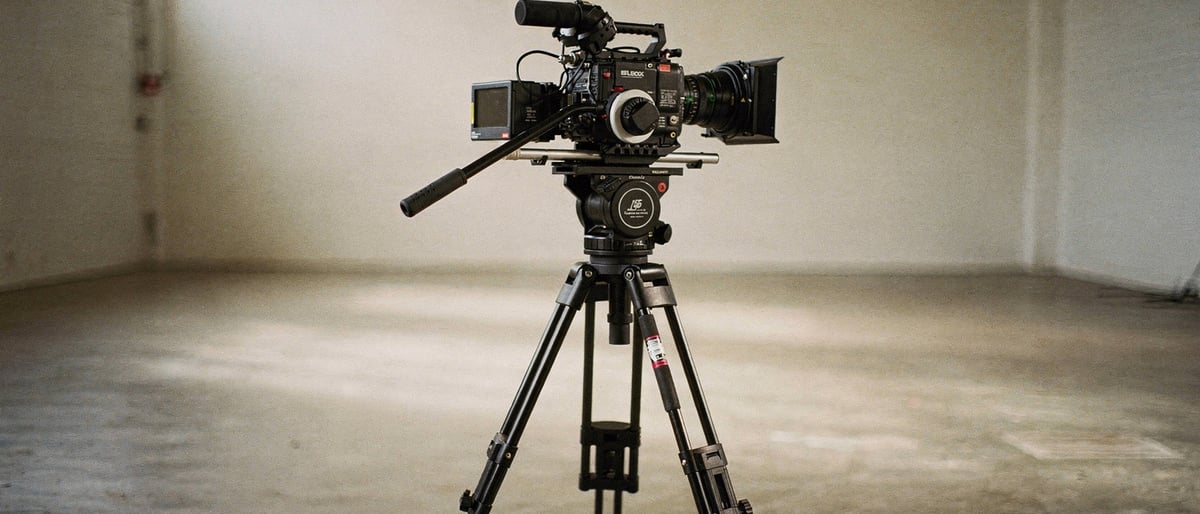
We premiered our brand film on a 70-inch screen with the lights down. It was beautiful. Six months later I checked the shared drive: four opens, twice by me. The problem was not the film. It was the question we asked when we commissioned it.
We hired a director. We booked a full day of filming across two locations. We had a proper edit suite sign-off, colour grading, a music licence. The premiere was in the boardroom with the blinds down and someone brought champagne. The film was good. I still think that.
Six months later I went into the shared drive to find it for a proposal. I checked the view count. Four opens. Two were me.
The sales team had not touched it. When I asked why, one of them said: "It's great for the website, but I don't really know when to send it." That one sentence told me everything about what had gone wrong.
The commissioning question that doomed it
When we briefed the director, the question driving the project was: what do we want people to feel about us? We wanted to convey ambition, quality, creativity, the energy of working with our team. Those are legitimate things to communicate. The film communicated all of them.
The question we did not ask was: what do buyers need to know before they will sign? Those are different briefs with different outputs. One produces something beautiful. The other produces something useful in a sales conversation.
Marcus Sheridan and Tyler Lessard document this pattern in The Visual Sale with data that is uncomfortable to read if you have ever commissioned a brand film. About Us videos rank last for sales team usage, across every industry they studied. Sales teams do not use them because they do not answer the question the buyer has when they are actually deciding whether to buy.
A brand film answers: who are we? A sales video answers: why should I trust you with this? Most companies make the first one and wonder why sales ignore it.
The buyer who is three weeks from signing a contract is not asking "who are these people?" They already know. The question in their mind is: will this go well? What happens if something goes wrong? Have these people done this before for someone like me? A ninety-second film about company culture and passion does not answer any of those questions.
The video your sales team actually reaches for
Sheridan is specific about the types of video that get used in sales conversations, and why. Each one starts with a buyer question. Each one exists to resolve a specific fear or doubt that sits between the prospect and the decision to buy.
The cost video is the first one. What does this cost, what drives that cost, and who is it not right for. Most companies will not make this one. The ones that do find it does more to build trust in a sales conversation than almost any other single piece of content.
The process video is the second. What actually happens after someone decides to work with you? Walk through it. Specifically. What does week one look like? What do they need to provide? What will they get back and when? Buyers want to be able to imagine the experience before they commit to it.
The "is this right for you?" video is the third, and in some ways the most powerful. This is the one where you explicitly describe who your product or service is and is not a good fit for. It sounds counterintuitive to make a video about who should not buy from you. The effect it has on the buyers who are a good fit is the opposite of what most people expect. More on that in the next piece.
About Us video covering company history, values, and team. Screened at the all-hands, shared to LinkedIn, filed.
Cost video, process video, and 'Is this right for you?' video. Each answering a specific buyer fear before the first call.
The test for whether a video is a sales tool
There is a simple question Sheridan uses to evaluate any piece of video content: would your sales team send this in a conversation with a prospect who is actively considering buying? If the answer is yes, it is a sales video. If the answer is no, or "it depends," or "maybe in certain situations," it is something else. Brand content, awareness content, social content. Those things have value. Calling them sales tools when they are not just creates expensive confusion.
The video your sales team never opens is not a sales tool. It is a brand artefact.
The tell is in the phrasing. When someone says "it's great for the website," they are telling you it belongs in the awareness stage. When they say "I don't know when to send it," they are telling you it does not fit naturally into a sales conversation. Both of those things can be true of a film that is technically excellent. Quality of production has no bearing on whether something is useful at the moment a buyer is deciding.
What I would do differently
The brand film was not a mistake. It has done what brand content does: built recognition, given people a sense of the company, lived on the website and done quiet work over time. That has value. What was a mistake was commissioning it with a sales brief and then being surprised when it did not function as a sales tool.
If I were briefing a video production now, the first question I would ask is not "how do we want to feel on screen?" It would be: what is the buyer asking right before they decide? What is the thing they need to hear that they currently do not hear? What fear would dissolve if we could just show them this one thing?
Answer those questions first, then brief the video. In that order. The production quality can follow. A well-made video that answers a buyer's actual question will do more work in a sales conversation than the most cinematic brand film in the shared drive that nobody opens.
We spent £30,000 learning that the question matters more than the budget. The next video we made cost about £800. The sales team used it on almost every proposal for the following year.