
Eleven minutes before we went live, the CEO's laptop dropped off the call.
Not the studio. Not our kit. His laptop, in a hotel room in Frankfurt, on a hotel network, with three hundred staff and a row of investors waiting on the other side of the stream. He was the opening speaker. We had a set built around the idea that he would appear, large and crisp, composited into the scene beside our presenter. The programme feed was now showing a frozen frame of his ceiling.
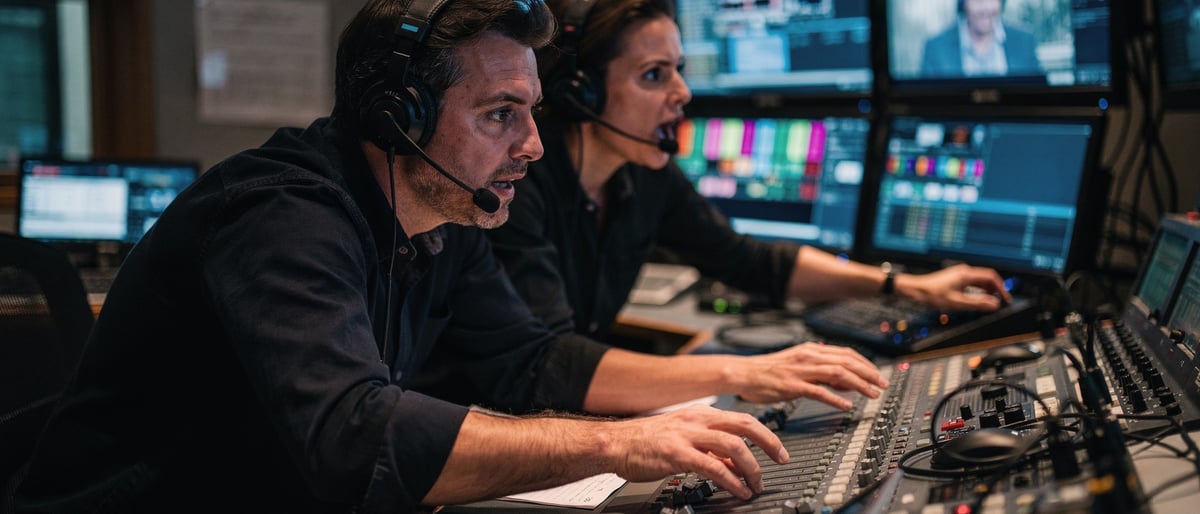
I have directed enough live shows to know the feeling in my chest at that moment. It is not panic. Panic is loud and useless. It is the quiet, fast sorting of options that you run through while your face stays still, because the floor manager is watching your face and the floor manager talks to the room.
I want you to understand one thing before I tell you how that show ended. What goes wrong in a live virtual broadcast is almost never the thing the client worried about.
The failures nobody rehearses
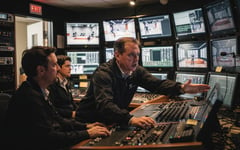
Clients arrive worrying about the camera. Will I look good. Will the set look expensive. Fair questions, and a virtual studio answers them well, because the background is built in software and the lighting is controlled to the inch. What I have learned across years of gallery desks is that the camera is the most reliable thing in the room. The camera does its job. The failures live everywhere else.
They live in the speaker's connection. They live in a slide deck rebuilt at 2am and never re-sent. A presenter handed the wrong running order, a clip with no audio embedded, a remote panellist joining from a kitchen with a radio on. That is where they live. The set is solid. The humans and the laptops feeding into it are the soft, breakable parts, and they break in the last fifteen minutes, because that is when everyone is rushing.
Years on the gallery desk taught me something about the edit that holds for live too. The audience never sees the cut. They feel it. When a live show fails, viewers rarely know what technically broke. They feel the show stop being in control, and that feeling is what they remember about your company a week later.
The camera is the most reliable thing in the room. The failures live everywhere else, and they arrive in the last fifteen minutes.
What we actually do about it
So, Frankfurt. The reason that show did not fall over is boring, and the boredom is the point.
We had a pre-recorded backup of the CEO's opening, captured two days earlier as a contingency he had grumbled about giving us. We rolled it. To the audience, the show opened on time with a confident leader speaking to camera. While it played, my team got him back on a phone tether, tested levels, and slotted him in live for the Q&A eight minutes later. Nobody outside the gallery knew the first three minutes were not happening in real time. The investors saw a company that ran like a machine.
That is the trade you are really buying with a virtual studio. Not a prettier background. A team whose entire job is to assume the soft parts will break and to have already built the catch.
Before: a single live feed from a remote speaker, no backup, a producer hoping the hotel wifi holds for forty-five minutes in front of the whole company.
After: a pre-recorded contingency on the timeline, a phone-tether fallback briefed in advance, a director who can switch sources in under two seconds without the audience feeling the join.
The unglamorous habits matter more than the equipment. We send a tech check invite and we chase the people who skip it, because the panellist who skips the check is the panellist who joins from the kitchen. We rebuild every speaker deck inside our own playback machine rather than trusting a shared link that can rot. We run a full timing pass with the real running order in the real space, because a presenter who has the order in their head does not need an autocue rescue when a segment drops. None of that photographs well. All of it is why the show stays on air.
The cost of finding out the hard way
A first big broadcast run in-house or with a recorded-only supplier, fine until it is not, and the not is permanent because live has no second take.
A half-day in the studio with a crew who have directed live, watching the soft parts break on purpose long before the night you cannot afford to.
Most companies learn this the expensive way. They run the first big virtual broadcast in-house or with a supplier who has only ever done recorded work, and it is fine, until it is not, and the not is permanent because live has no second take. The all-hands where the audio echoed for nine minutes. The product launch where the demo video played silent to two thousand registered viewers. People do not file those away as technical hiccups. They quietly decide the company is not as sharp as it claimed, and they are not wrong to, because the company chose to find out on the night.
Virtual studios in London are not in short supply. Crews who have actually directed live, with reflexes built from shows that went wrong, are rarer than the websites suggest. The difference shows up in exactly one moment, the eleven-minutes-before moment, and you cannot buy it retrospectively once you are in it.
Book the studio before the season fills
Our diaries for the autumn broadcast season fill from late summer, because that is when boards schedule results and conferences. If you have a live show with real stakes coming, the cheapest insurance is a half-day in the studio with the crew who will run it, watching the soft parts on purpose before the night you cannot afford to.
Bring your worst-case speaker, the one on the worst connection. We would rather it breaks in front of us in June than in front of your investors in October.
Frequently asked questions
What actually fails most often in a live virtual broadcast?
Rarely the camera or the set. The soft parts break instead: the speaker's connection, a deck rebuilt at 2am and never re-sent, a clip with no audio, a panellist joining from a noisy kitchen. They tend to go in the last fifteen minutes when everyone is rushing.
What does a virtual studio actually buy me?
Not a prettier background. A team whose job is to assume the soft parts will break and to have already built the catch, so a dropped feed never reaches the audience.
How do you keep a show on air when a remote speaker drops off?
With contingencies prepared in advance: a pre-recorded backup of the opening on the timeline, a phone-tether fallback briefed ahead of time, and a director who can switch sources in under two seconds without the audience feeling the join.
Why does directing experience matter more than the kit?
Virtual studios in London are not in short supply, but crews who have actually directed live, with reflexes built from shows that went wrong, are rarer. The difference shows up in the eleven-minutes-before moment, and you cannot buy it once you are in it.
When should I book for the autumn broadcast season?
From late summer onwards diaries fill, because that is when boards schedule results and conferences. Booking a half-day rehearsal early is the cheapest insurance for a live show with real stakes.