
We had sixty people in a conference room and four thousand watching online. The brief was simple: make it feel like one event, not two.
That brief was harder than it sounded.
The split that most hybrid events ignore
In most hybrid formats, the in-room audience and the online audience are watching different shows. The room gets the energy, the atmosphere, the tangibility of being there. The stream gets a wide locked-off camera, an audio feed that picks up every air-conditioning unit in the building, and a presenter who keeps turning to address the people in seats behind the lens.
Both audiences notice the gap. The room doesn't mind, because they have what they came for. The online viewers feel it. They feel like an afterthought.
For this client, that wasn't acceptable. Their online audience wasn't overflow. It was their primary channel: global employees, partners, and senior stakeholders who couldn't travel to London. If those four thousand people felt like B-ticket holders, the event had failed regardless of what happened in the room.
What we changed
The fix wasn't complicated in principle. It was specific in execution.
A wide locked-off camera, an audio feed picking up every air-conditioning unit, and a presenter who keeps turning to address the room. Online viewers feel like an afterthought.
A studio area inside the event space, presenters on a mark in front of a green screen, composited live against the client's branding. The room and the stream watch the same feed.
We built a studio area inside the event space, separate from the room-facing staging. When presenters addressed the online audience, they spoke to a camera on a mark, in front of a green screen, composited in real time against a background that matched the client's event branding. The in-room audience saw that same composited image on the screens behind the presenters. The online audience and the room were watching the same feed.
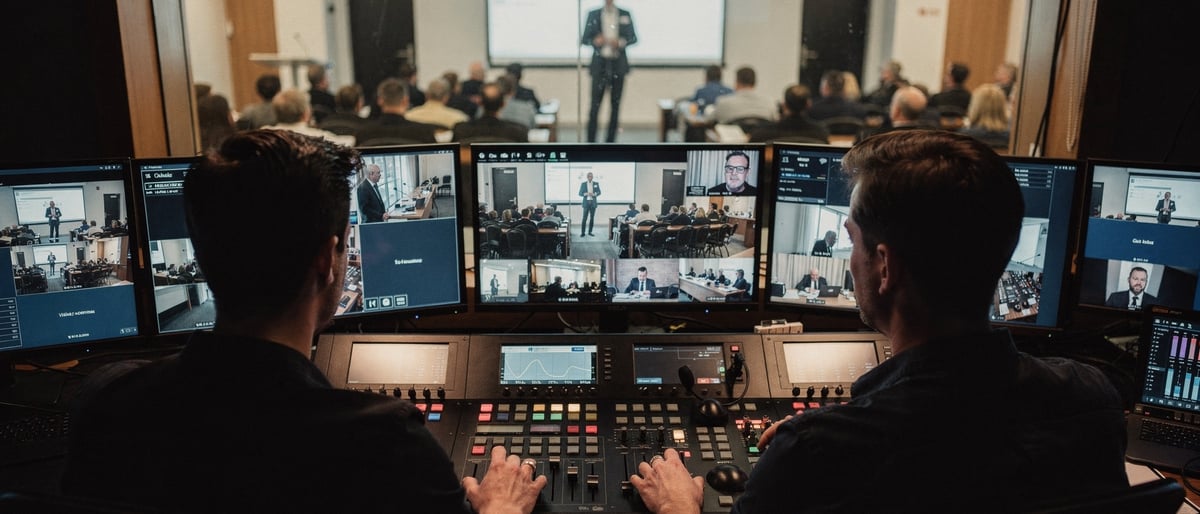
For segments involving the room, panel conversations, and audience Q&A, we cut between multiple cameras to give the online viewer a proper broadcast experience: wide shot of the full room, close-up on the active speaker, graphic overlay for questions coming in from the stream.
The director's job was to make both audiences feel central. Not catered for. Central.
What that required on set
The technical side was straightforward compared to the production side. Matching the green-screen light to the composited background in a live event space took about ninety minutes of setup. We've done this enough times in our virtual studios london work that the compositing runs clean as a matter of process. The rig doesn't change. The result doesn't change.
The harder work was running the session in a way that didn't create two different rhythms. A presenter who turns to face the room breaks the frame for the online viewer. A presenter who stares down a camera barrel disconnects from the people sitting five metres away. Getting that balance right is a rehearsal problem, not a technology problem.
We rehearsed every transition the morning of the event. Not the content, just the physical flow: where to stand, when to look at which camera, how to shift between in-room and online segments without a visible gear change. That rehearsal is the part most hybrid events skip, and it's the part that determines whether the whole thing holds together on air.
The visual parity question
To create a consistent experience for both audiences, you need the stream to look like it was designed, not like it was pointed at a room.
The green-screen element is what makes that possible. The composited background means the online viewer's environment is built around the brand, not around whatever the physical venue happens to look like behind the camera. A hotel ballroom or a conference centre breakout room doesn't give you much to work with visually. The backdrop solves that.
It also means the stream holds its quality regardless of venue. We've run setups like this in rooms with difficult sight lines, poor natural light, and low ceilings. The composited background normalises all of that for the online viewer. What they see is the brand, not the room's limitations.
That matters because online audiences read the environment as a signal about intent. A stream that looks like it was set up in five minutes signals exactly that. A stream that looks designed signals that the organisation considered who was watching.
The result
Post-event feedback from the online audience scored 91 per cent on “felt like a proper event” against 63 per cent the previous year, when the same annual event had run without the studio setup.
The client's internal communications team told us that for the first time they hadn't received the standard complaint about the stream being a poor substitute for being there. That's the bar. Not impressive production. Not a beautiful feed. The stream not being worse.
It sounds like a low target. It isn't. That complaint, in various forms, had been coming in for three years running. It stopped the year we changed the setup.
The principle behind it
Every hybrid event we run starts from the same question: is the online audience making a choice to be there, or are they making a compromise?
If they've chosen to watch rather than travel, they've decided the stream is worth their time. Four thousand people making an active choice to tune in is a significant audience. They deserve an experience that takes their presence seriously.
The production is how we deliver that. Not by creating something spectacular, but by removing the gap between what the room gets and what the stream gets. When both audiences are watching the same thing, the event is one event.
[Talk to us about your next hybrid event.]
Frequently asked questions
How do you make the online audience feel part of a hybrid event?
Build the stream around the brand rather than the venue, and run the same feed to the room and to viewers at home. When both audiences watch the same thing, the event reads as one event rather than two.
Why use a green screen at a live event instead of just filming the room?
The composited background means the online viewer sees a designed environment built around the brand, not a hotel ballroom or breakout room behind the camera. It also holds the stream's quality regardless of the venue's sight lines, light or ceilings.
How long does the green-screen setup take on site?
Matching the green-screen light to the composited background in a live space takes about ninety minutes of setup. The rig and the compositing process do not change between events.
What is the hardest part of running a hybrid event well?
The production side is harder than the technical side. Stopping the room and the stream from running on two different rhythms is a rehearsal problem, not a technology problem, so every transition is rehearsed on the morning of the event.
Does this approach actually change how the online audience responds?
For this client, post-event feedback scored 91 per cent on felt like a proper event against 63 per cent the previous year. The recurring complaint about the stream being a poor substitute for being there stopped the year the studio setup was introduced.