
The brief asked for a two-minute video about the logistics team. It came back to me as a Word document with the word "passionate" used four times.
Briefs like that get written by people who care, under pressure, copying the tone of the last film the company made. The trouble is that nobody outside the building has ever sat through a film about how passionate a logistics team is. I knew the moment I read it that if we shot what was on the page, the file would live on a hidden page of the website and the team would never mention it again.
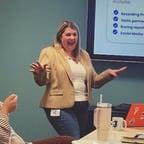
So I asked for an afternoon on the warehouse floor before we agreed anything. No camera. Just me and a notebook and the team lead, a woman called Priya who had run that floor for nine years.
The story was not in the brief
What Priya told me, somewhere near the loading bay, was not in the Word document. She told me about a winter when a supplier collapsed three days before Christmas and her team rebuilt the entire distribution route in a weekend, on whiteboards, sleeping in shifts, so that no customer order was late. She did not call it passionate. She called it the worst week of her working life, and she smiled when she said it.
That is the film. The brief wanted a brochure. The story wanted to be about the worst week, told by the person who lived it.
Why the honest version travels
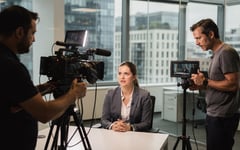
There is a thing about the close-up I learned the hard way on internal work. A close-up is not for showing detail. It tells the audience this is the moment that matters, slow down. So we built the documentary around close-ups of hands, whiteboards, tired faces, and Priya talking without a script. No corporate music bed. No drone shot of the building.
The brief wanted a brochure. The story wanted to be about the worst week, told by the person who lived it.
When companies hire a corporate video team in London, they often want the polished thing because the polished thing feels safe. Polished is exactly what gets ignored, because viewers have a finely tuned filter for the version of a company that has been smoothed for them. The honest version walks straight through that filter, because it does not trigger it.
Where the film actually went
We delivered the documentary as a single eight-minute film, longer than anyone asked for, with a ninety-second cut alongside it. I expected the short cut to do the work. I was wrong about which one travelled.
The eight-minute version ended up in three places I did not plan for. The people team put it in onboarding, because new starters understood the company's character from it in a way a values slide never delivered. Sales started sending it to prospects in regulated industries, because it showed how the company behaved under pressure rather than claiming a competence. And it opened the next all-hands, where Priya got an ovation from people who had never met her.
A two-minute team video, posted once on LinkedIn, a few internal likes, archived within a fortnight and never referenced again.
An eight-minute documentary used in onboarding, sent into live sales conversations, and opening the all-hands, with the subject recognised across the business.
Before: a two-minute team video, posted once on LinkedIn, a few internal likes, archived within a fortnight and never referenced again.
After: an eight-minute documentary used in onboarding, sent into live sales conversations, and opening the company all-hands, with the subject recognised across the business.
One film, paid for once, doing the job of an onboarding asset, a sales asset and an internal culture asset. The finance director did the maths on that before I did.
What this should change about your next brief
If you are about to commission corporate video in London, the risk is not that the film looks cheap. Crews can make most things look expensive now. The risk is that you spend the budget on the brochure version and end up with a file nobody inside or outside the company chooses to watch twice. That money does not come back, and the story you did not tell stays untold while a competitor tells theirs.
The fix costs you almost nothing up front. Before you sign off a brief, send whoever is making the film to spend an afternoon with the people the film is about. No camera. Tell them to come back with the worst week, not the best quarter. If the crew you are talking to does not want that afternoon, or wants to shoot straight from the brief, that tells you what kind of film you are about to pay for.
We hold a short discovery session before any documentary, and it is the part clients are most tempted to skip and least often regret keeping. The afternoon with Priya cost a few hours. It is the only reason the film travelled.
Our documentary slots book a few weeks ahead, because the discovery work and the edit cannot be rushed without becoming the brochure again. If you have a team with a real story and a budget you only get to spend once, the next move is small.
Frequently asked questions
Why make an eight-minute documentary instead of a short two-minute video?
The longer documentary showed how the company behaved under pressure rather than claiming a competence, so it earned a place in onboarding, sales and the all-hands. The two-minute version was archived within a fortnight.
What is the discovery session and why does it matter?
It is a short afternoon spent with the people the film is about, with no camera, before anything is agreed. It is where the real story surfaces, and it is the only reason the film travelled.
How much does a discovery session add to the cost?
Almost nothing up front. The afternoon with the team lead cost a few hours, and that small step is what kept the film from becoming the brochure version nobody watches twice.
Should I brief the crew from the best quarter or the worst week?
Ask them to come back with the worst week, not the best quarter. Viewers filter out the polished version of a company, and the honest story walks straight through that filter.
How far ahead should I book a documentary?
A few weeks. The discovery work and the edit cannot be rushed without turning the film back into the brochure version.