
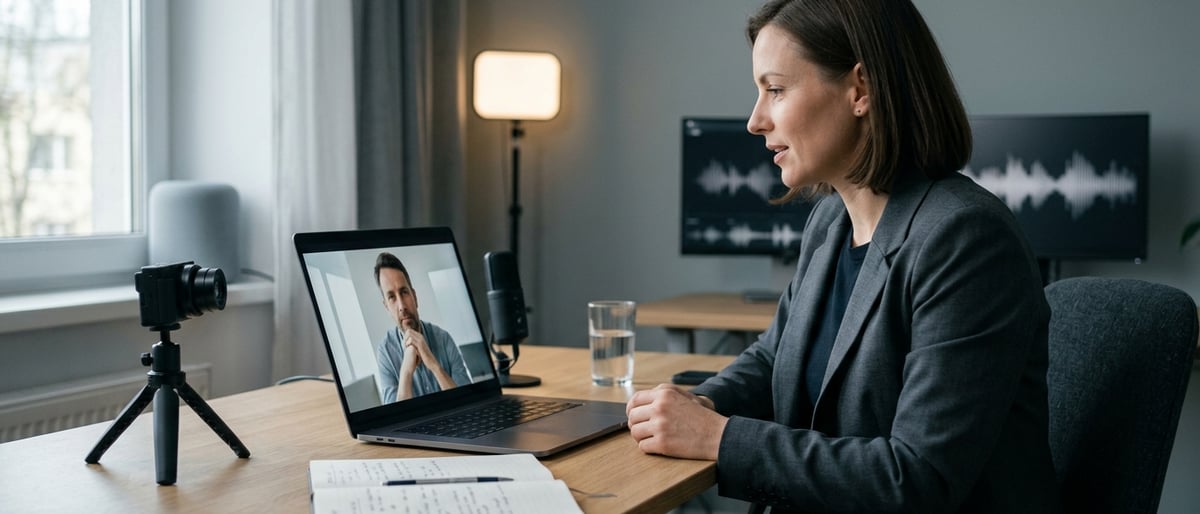
Before discovering the 80% Video concept from Marcus Sheridan's The Visual Sale, first calls were informational downloads, with Tom answering the same questions every time. A short pre-meeting video that addresses the 80% of questions every prospect asks transforms discovery into actual dialogue. The first call becomes a conversation about decisions, not a product orientation.
Early in my time as an SDR I noticed a pattern I couldn't shake. Every first call opened the same way. The prospect would ask what we do. I'd explain it. They'd ask how pricing works. I'd explain that. They'd ask about turnaround times, formats, what a typical engagement looks like. I'd explain all of it.
By the time we got to anything resembling a real conversation, we were twelve minutes in and the energy had flatlined. I was running an induction session for someone who hadn't agreed to be inducted.
Then I read Marcus Sheridan's The Visual Sale and came across the concept of the 80% Video. The premise is disarmingly straightforward: identify the questions that come up in roughly 80% of your sales conversations, record a short video answering all of them, and send it before the first call. The prospect arrives informed. The call starts at a different level.
When the prospect has already seen the video, the first call stops being an orientation. It becomes a negotiation of fit.
The shift in call quality was immediate. Prospects who had watched the video arrived with specific questions, not generic ones. "I noticed you said X in the video. How does that apply when the buying committee is distributed across three regions?" That's a real conversation. That's someone engaging with the substance rather than gathering basics.
There's something else at work here, too. Research on B2B buying behaviour consistently shows that 57 to 70% of the buying decision is made before a prospect ever speaks to a salesperson. They've read the content, checked the LinkedIn profiles, formed a view. The 80% Video accelerates and shapes that pre-decision window rather than ignoring it.
First call: explain what we do, how we price it, what a project looks like, answer logistics questions
First call: prospect already knows the fundamentals, conversation goes straight to strategic fit and decision criteria
Sheridan's point in The Visual Sale is that video builds trust at a speed that text cannot match. When a prospect watches you explain something on camera, without a sales script, without polish theatre, they form an impression of how you think. They decide whether they like your approach before they've invested an hour in a call. That pre-qualification cuts both ways: the prospects who book a call after watching the video have already decided they want to talk.
The content of the video matters less than the candour of it. Prospects are not looking for a marketing monologue. They want to understand what working with you actually involves, including the bits that might not suit them. Answering those questions honestly, on camera, before the first call, signals something that no brochure can: that you respect their time enough to prepare for it.
The 80% Video is a filter as much as it is a tool. The prospects who show up after watching it have already done the work.
I've iterated on the video several times. The first version ran to six minutes and covered everything I thought was important. It underperformed. The version that works best is three minutes, covers five questions, and ends with a direct invitation: "If any of this resonates, I'd like to spend thirty minutes understanding your specific situation." Specific beats thorough every time.
The frame Sheridan builds around this is a larger argument about education-led selling. The sales teams that win aren't the ones with the sharpest pitch. They're the ones who make it easiest for buyers to make a confident decision. A pre-meeting video is one of the cleanest ways to do that.
First calls are expensive. They require preparation, scheduling, attention from someone senior on the prospect's side. Arriving at that call with the baseline already established isn't just a time-saving device. It's a signal about how you operate. Most salespeople use the first call to introduce themselves. The 80% Video lets you use it to go somewhere useful.