
"We're done. There's nothing left." It was March, and the head of marketing on the other end of the call was talking about her video budget, not her career, though she did not sound certain about the distinction.
She had spent the year's allocation by the spring. Three shoots, three crews, three half-days, three invoices. Each one a single video. Each one good, honestly. And each one a separate setup, a separate booking, a separate trip, a separate cost. By March she had three nice films and nine months of nothing planned to fill.
I have heard a version of that call more times than I can count. It is almost always the same shape. The work was fine. The plan was the problem.
The thing nobody puts in the budget line
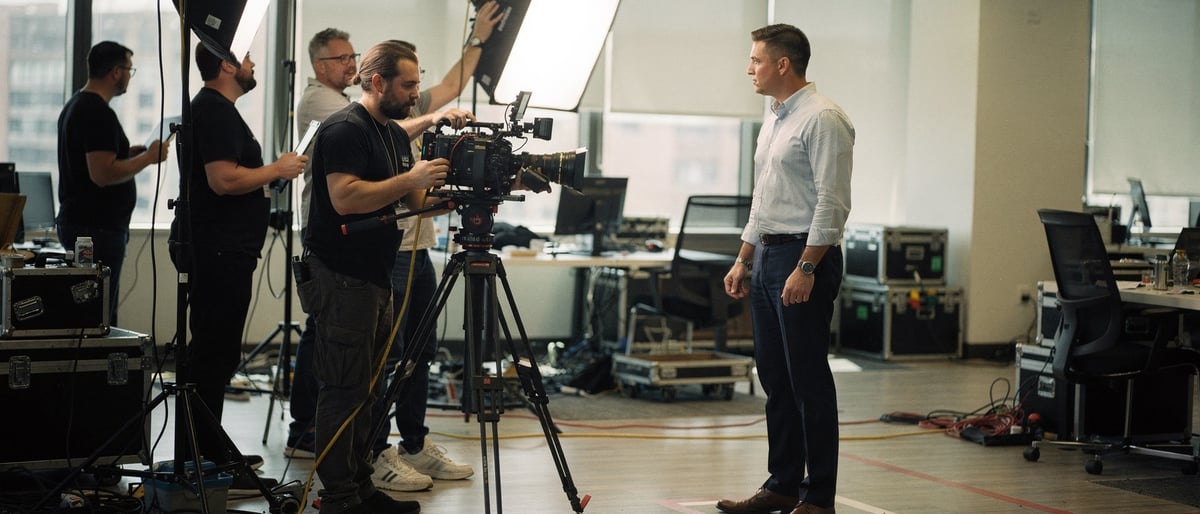
When you book a shoot, you are not really paying for the minutes on screen. You are paying for everything around them. The crew arriving. The kit going up. The lights being set. The set being dressed. The first hour of warming a nervous executive up so they stop sounding like a press release. By the time anyone is genuinely shooting anything worth keeping, you have already spent most of the day.
Do that three separate times and you have paid for that same start three times over. Not the filming. The getting-ready-to-film. It is the most expensive thing in video and it never appears on a single proposal.
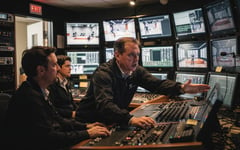
A studio day kills that maths in one move. The set is up because it lives there. The lights are rigged. The crew is in the gallery. You are not buying the setup again. You are buying the bit that was always the point.
What two days actually looks like
People hear "a year of content in two studio days" and assume it means thin. Quantity over the thing that makes anyone watch. It is the opposite, and the reason is boring and structural, so stay with me.
Three separate shoots, three crews, three half-days, three invoices. You pay for the setup three times over, then run dry by spring with nothing left to publish.
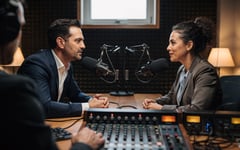
Two studio days, planned first. One presenter, one chair, a backdrop that changes behind them, and a year of designed content captured while they are warm.
A virtual studio in London can change what is behind the speaker in under a minute. Not redress a set. Change the world. So you do not shoot one thing well. You plan the year first, then walk your presenter through it in blocks. Company update against the data wall. Three customer-facing explainers against a clean backdrop. A founder piece against the London skyline. Six short answers to the questions sales gets asked every week, shot back to back while the person is already warm and already in the chair.
The presenter does the hard part once. The nerves, the energy, the looking-like-they-mean-it. You do not spend it and lose it. You capture a whole year of it in the window where they are actually good.
One client of ours, a fintech, came in with a list of 22 pieces she needed before the next funding round. We shot the lot in two days. Her old rate was three videos by March. Her new rate was a finished library by the end of the second afternoon, with the founder still in a decent mood at the end of it, which on a normal shoot almost never happens.
Where the year actually comes from
Here is the part that turns two days into twelve months, and it is not the filming. It is the cutting.
A single forty-minute session shot properly is not one video. It is the keynote, six short standalone answers, three teasers, a run of quote cards, audio for a podcast feed, and a month of social clips that each work on their own with no context. The studio day gives you the raw material. The plan decides, before anyone presses record, exactly what each block becomes. That is why it lasts. You are not hoping to find content in the footage afterwards. You wrote the year first and then went and shot it.
The marketing head who was "done" in March did her second year differently. Two days in January. She was still publishing from it the following Christmas. Same budget as her three scattered shoots. Roughly ten times the output, because the output was designed and not discovered.
The fear worth saying plainly
The thing that should worry you is not the cost of a studio day. It is the quiet version of what happened to her the first year. You spend the budget early on a few one-offs, they each look fine, and then the calendar goes silent. Competitors keep showing up. You do not, because you have nothing left to publish and no money to make more. Nobody decided that. It just happened, one separate booking at a time.
Going dark is rarely a decision. It is what running out looks like when you only ever bought single shoots.
What I'd do before your next shoot
Before you book another half-day for one film, do the boring thing first. Write the whole year. Every piece you would ideally publish, listed out, no filter. Then look at it and ask how much of it could be one person, one chair, a set that changes behind them, and two focused days.
You will usually find most of it can. Not because the work gets thinner. Because the cost was never in the filming. It was in doing the setup again and again until the money ran out.
If you want help building that list before you spend anything, get the two-day content plan and we will map a full year of video against two days in the studio, so you can see the maths before you commit a single shoot.
Frequently asked questions
How can two studio days produce a whole year of video?
Because the plan is written before anyone presses record. A single forty-minute session becomes a keynote, short standalone answers, teasers, quote cards, podcast audio and a month of social clips. The studio day gives you the raw material and the plan decides what each block becomes.
Why is shooting on separate days so expensive?
Most of the cost is the getting-ready-to-film, not the filming. The crew arriving, the kit going up, the lights being set, the warm-up. Do that three separate times and you pay for the same start three times over.
Does shooting everything at once mean thinner content?
No. A virtual studio can change the world behind the speaker in under a minute, so you plan the year first and walk the presenter through it in blocks. The output is designed rather than discovered, which is why it lasts.
What should I do before booking my next shoot?
Write the whole year first. List every piece you would ideally publish, with no filter, then ask how much of it could be one person, one chair, a set that changes behind them and two focused days. Usually most of it can.
What is the real risk of buying single shoots?
Going dark. You spend the budget early on a few one-offs, they each look fine, then the calendar goes silent with nothing left to publish and no money to make more. Nobody decides it; it just happens one booking at a time.